
Qwen 3.8: Alibaba's Next-Gen Multimodal AI
Discover everything about Qwen 3.8, Alibaba Cloud's latest 2.4 trillion-parameter multimodal AI model. Explore its architecture, features, capabilities, enterprise use cases, pricing, limitations, and how it compares with today's leading frontier AI models.
Artificial intelligence is evolving faster than ever, with every major release pushing the boundaries of what AI systems can achieve. From generating human-like text to understanding images, videos, and complex business documents, today's frontier models are transforming how developers build applications and how enterprises automate workflows. Alibaba Cloud has now entered this rapidly evolving landscape with Qwen 3.8-Max Preview, its most advanced large language model to date.
Announced at the World AI Conference 2026, Qwen 3.8 is a 2.4 trillion-parameter multimodal AI model built using a sparse Mixture-of-Experts (MoE) architecture. Unlike previous generations of the Qwen family, this model has been designed to process not only text but also images, videos, and documents, making it capable of handling significantly more complex tasks. Alibaba describes it as a "professional coworker" that can assist with software development, document analysis, business automation, and agentic workflows.
While the model's specifications are impressive, many technical details—including independent benchmark results, training methodology, and licensing—are yet to be released. This article explores everything currently known about Qwen 3.8, including its architecture, capabilities, improvements over previous versions, and why it has become one of the most anticipated AI models of 2026.
What is Qwen 3.8?
Qwen 3.8 is Alibaba Cloud's latest flagship AI model and the newest addition to the Qwen family of large language models. The currently available version, Qwen3.8-Max Preview, serves as an early release that allows developers to experiment with the model through Alibaba Cloud's Token Plan while the company prepares an open-weight release in the future.
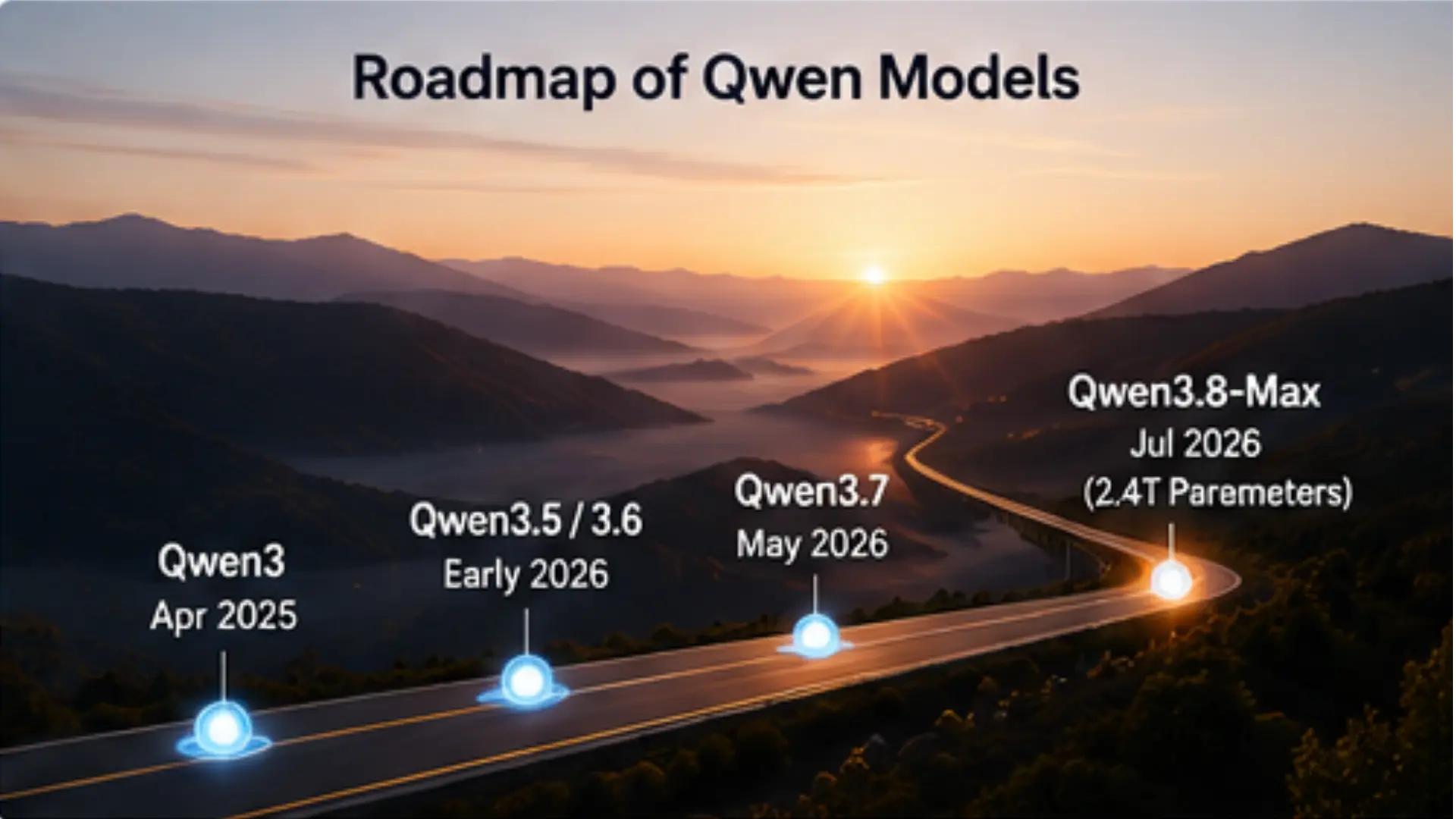
Roadmap of Qwen Models
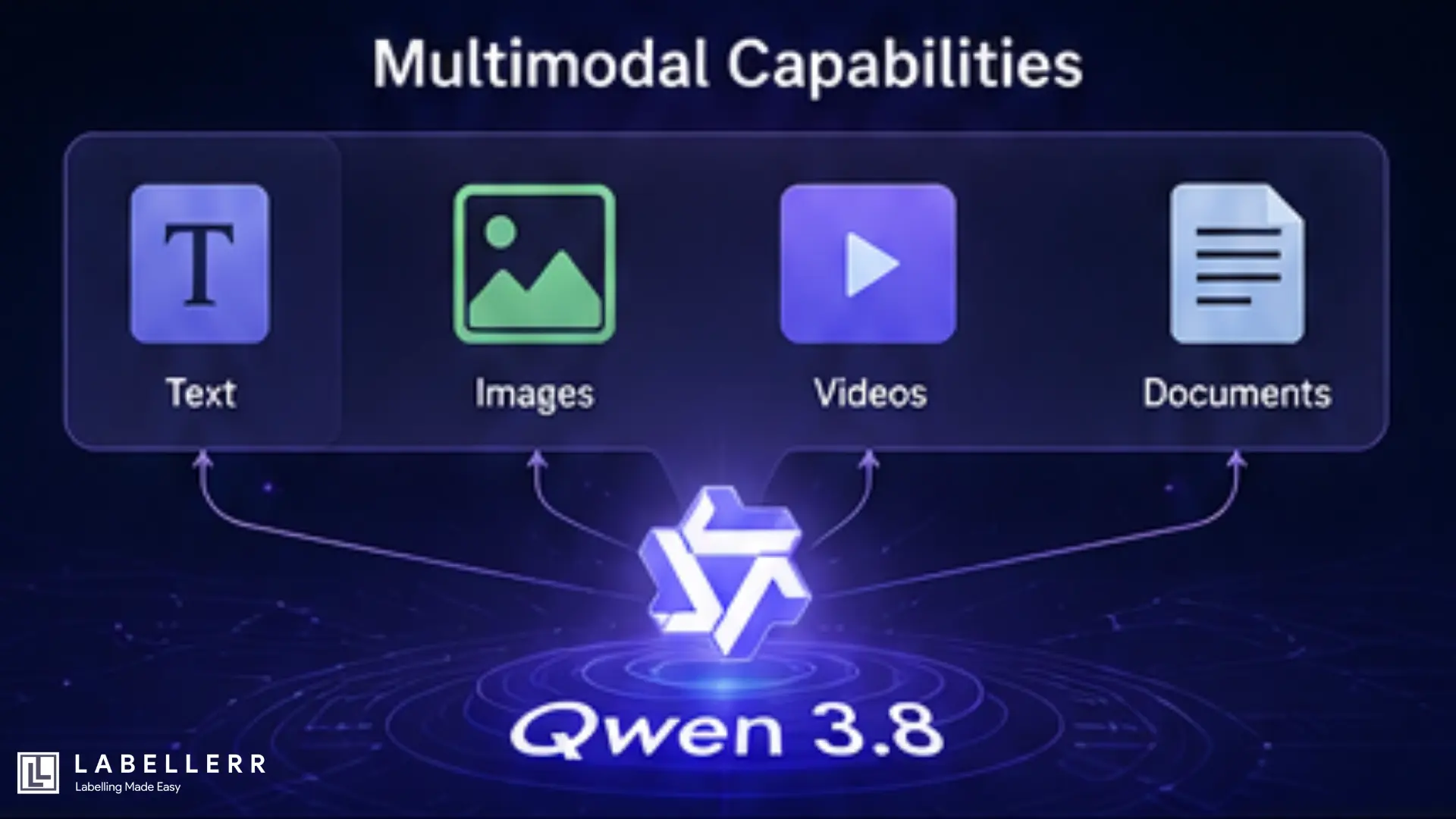
The most significant advancement in Qwen 3.8 is its transition to a fully multimodal architecture. Earlier Qwen models primarily focused on text generation, whereas Qwen 3.8 can understand and reason across multiple input formats, including text, images, videos, and documents. This enables developers to build AI systems capable of interpreting screenshots, summarizing lengthy PDF reports, analyzing diagrams, or combining visual and textual information within a single conversation.
Alibaba also positions Qwen 3.8 as a substantial improvement over Qwen 3.7, particularly in coding, enterprise productivity, long-context reasoning, and AI agent workflows. Although these claims are based on Alibaba's internal evaluations and await independent verification, they highlight the company's ambition to compete directly with the latest frontier AI models.
Why Qwen 3.8 Is an Important Release
The AI industry is rapidly moving beyond simple conversational assistants toward models capable of executing complete workflows. Modern enterprises need AI systems that can analyze large volumes of information, reason across multiple sources, generate production-ready code, and interact intelligently with external tools.
Qwen 3.8 has been designed specifically for this new generation of AI applications. Rather than functioning solely as a chatbot, it aims to become an intelligent assistant capable of supporting developers, researchers, and business professionals throughout complex, multi-step tasks.
Its multimodal capabilities allow it to interpret documents alongside images and videos, while its long-context reasoning enables it to process substantially larger amounts of information than traditional language models. Together, these features make Qwen 3.8 particularly attractive for enterprise environments where context, accuracy, and workflow automation are critical.
Understanding the Architecture Behind Qwen 3.8
One of the most striking aspects of Qwen 3.8 is its enormous scale. Alibaba states that the model contains 2.4 trillion total parameters, making it one of the largest AI models publicly announced to date. However, this number does not mean that every parameter is activated whenever a user submits a prompt.
Instead, Qwen 3.8 is built on a Sparse Mixture-of-Experts (MoE) architecture, an increasingly popular approach for scaling modern language models efficiently.
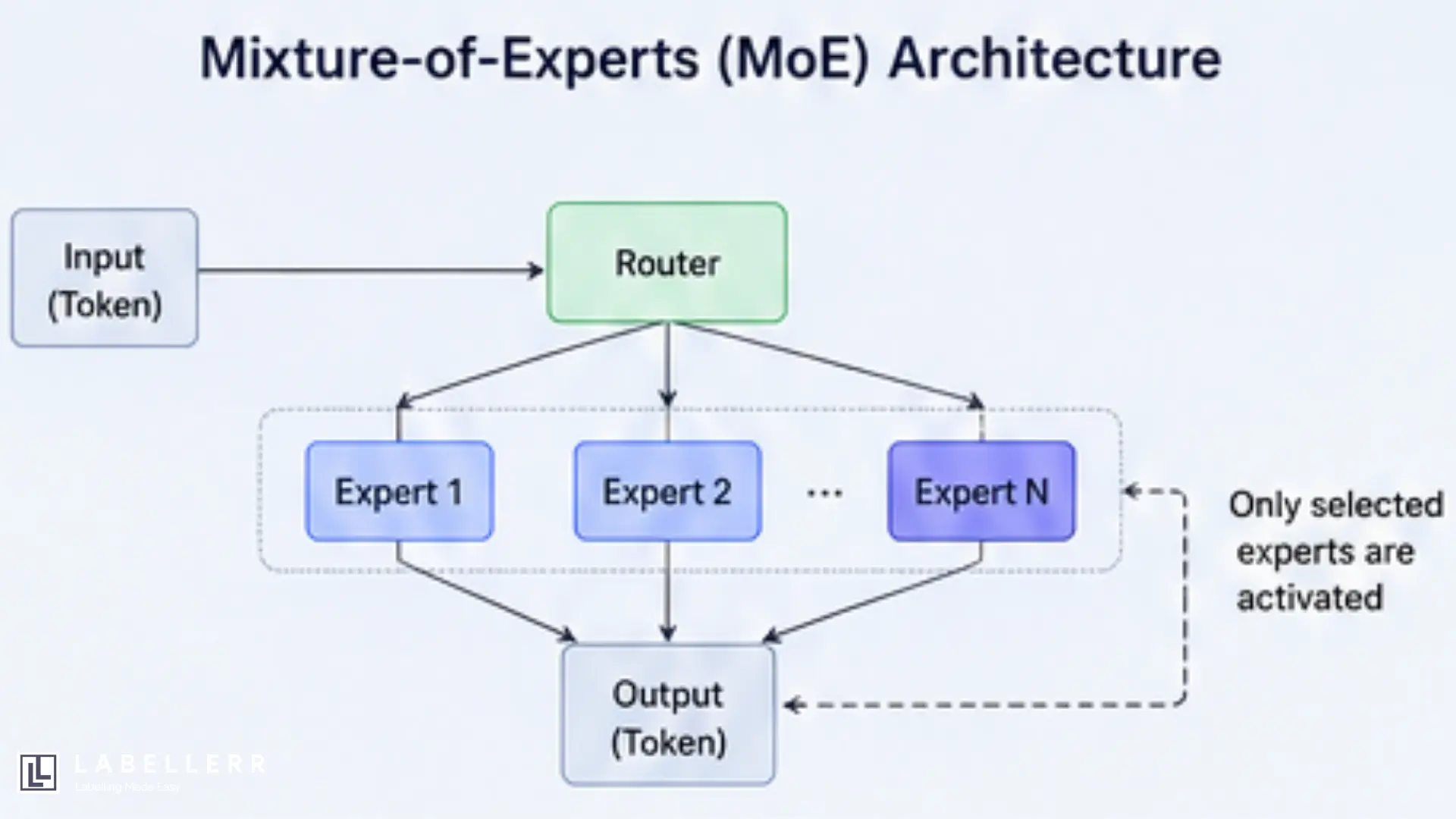
Architecture
In a traditional transformer model, every parameter contributes to every inference request. While this design is straightforward, it becomes computationally expensive as models grow larger. Mixture-of-Experts addresses this challenge by dividing the network into multiple specialized "expert" models. During inference, only the experts most relevant to the current input are activated, while the remaining experts remain idle.
This selective activation significantly improves computational efficiency while allowing developers to scale models far beyond what would otherwise be practical. Although Alibaba has confirmed the overall parameter count, it has not disclosed how many parameters are active during inference, making it difficult to estimate the model's actual computational requirements.
Key Technical Specifications
Based on the information currently released, Qwen 3.8 introduces several notable technical improvements over previous Qwen models.
| Feature | Specification |
|---|---|
| Model | Qwen3.8-Max Preview |
| Parameters | 2.4 Trillion |
| Architecture | Sparse Mixture-of-Experts (MoE) |
| Supported Inputs | Text, Images, Videos, Documents |
| Release | July 2026 (Preview) |
| Availability | Alibaba Cloud Token Plan |
| Open Weights | Planned for Future Release |
Another specification attracting significant attention is the model's reported one million token context window. Although Alibaba has not officially confirmed this figure, multiple early reports suggest Qwen 3.8 is designed for extremely long-context reasoning. If validated, this would allow organizations to analyze entire books, technical documentation, large codebases, or extensive research reports within a single interaction.
What's New in Qwen 3.8?
Compared to earlier Qwen releases, version 3.8 introduces improvements that extend well beyond simply increasing the parameter count.
The most obvious enhancement is its native multimodal capability. Instead of processing only written text, Qwen 3.8 can understand visual information from images and videos alongside traditional documents. This significantly expands the range of applications developers can build, including document intelligence systems, visual assistants, enterprise search platforms, and multimodal research tools.
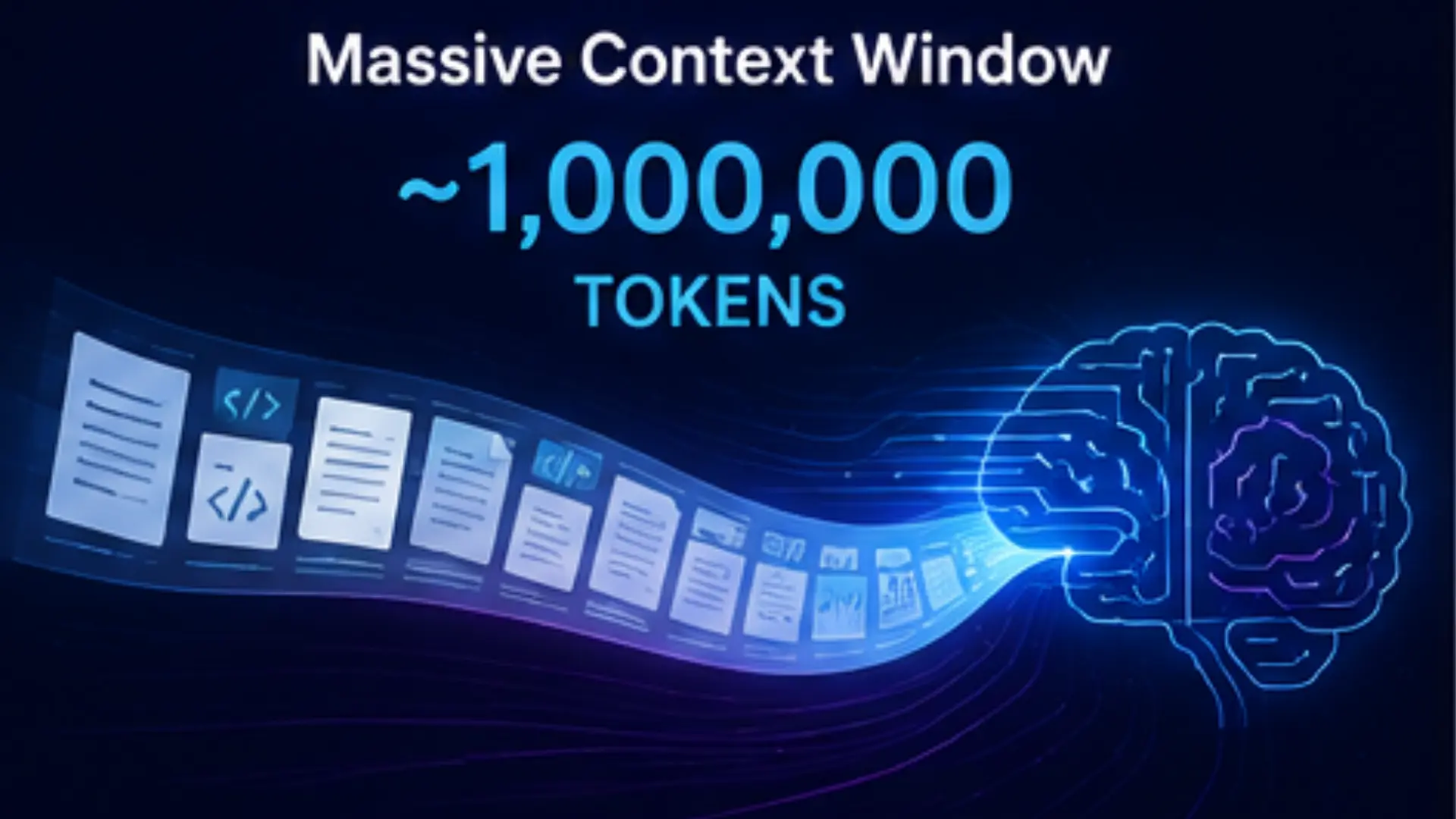
Long Context Capability
Another major focus is software engineering. Alibaba states that Qwen 3.8 has been optimized for complex coding workflows involving large projects rather than isolated programming questions. Instead of generating individual code snippets, the model is intended to understand dependencies across multiple files, debug existing applications, implement new features, and assist developers throughout the software development lifecycle.
The model also emphasizes long-context reasoning. Enterprise users frequently work with thousands of pages of documentation, financial reports, technical manuals, legal contracts, and research papers. Qwen 3.8 has been designed to retain context across these extended inputs, enabling more coherent analysis and reducing the need to split documents into smaller sections.
Alibaba further describes Qwen 3.8 as a professional coworker, highlighting its ability to automate business workflows such as data analysis, report generation, office productivity, and AI-assisted planning. This reflects the broader industry trend toward AI agents capable of executing complete tasks instead of merely answering questions.
Core Capabilities of Qwen 3.8
Qwen 3.8 combines several advanced capabilities that make it suitable for enterprise and developer-focused applications.
Its reasoning engine is designed to solve complex, multi-step problems while maintaining consistency across long conversations. This makes the model particularly useful for research, planning, and analytical tasks that require deeper contextual understanding.
Its multimodal architecture enables developers to combine text with images, videos, and documents in a single prompt. For example, an organization could upload a financial report alongside supporting charts and ask the model to generate a comprehensive business summary. Similarly, software teams could combine screenshots, documentation, and source code to diagnose issues more effectively.
Multimodal Capabilities
Another major strength lies in AI agent workflows. Qwen 3.8 integrates with Alibaba's broader AI ecosystem, enabling intelligent agents capable of interacting with external tools, APIs, and enterprise software. Rather than simply responding to prompts, these agents can perform multi-step actions, automate repetitive business processes, and support decision-making across complex workflows.
Performance and Benchmarks
Alibaba positions Qwen 3.8 as one of its most capable AI models to date, claiming that the preview version ranks just behind Anthropic's Fable 5 in its internal evaluations. While this statement has generated considerable excitement, it is important to recognize that Alibaba has not yet released detailed benchmark scores or a comprehensive technical report to support these claims. As a result, independent researchers have not been able to verify how the model performs across standard AI evaluation benchmarks.
At the time of writing, no official results have been published for benchmarks such as MMLU, HumanEval, LiveCodeBench, or SWE-Bench. Early hands-on reports suggest that Qwen 3.8 performs particularly well in software engineering, long-context reasoning, document analysis, and multimodal understanding. However, until third-party evaluations become available, developers should view Alibaba's performance claims as promising rather than conclusive.
Real-World Applications of Qwen 3.8
Qwen 3.8 has been designed with enterprise productivity in mind rather than simply functioning as another conversational chatbot. Its multimodal capabilities and long-context reasoning allow it to solve complex workflows that involve multiple information sources and extended reasoning.
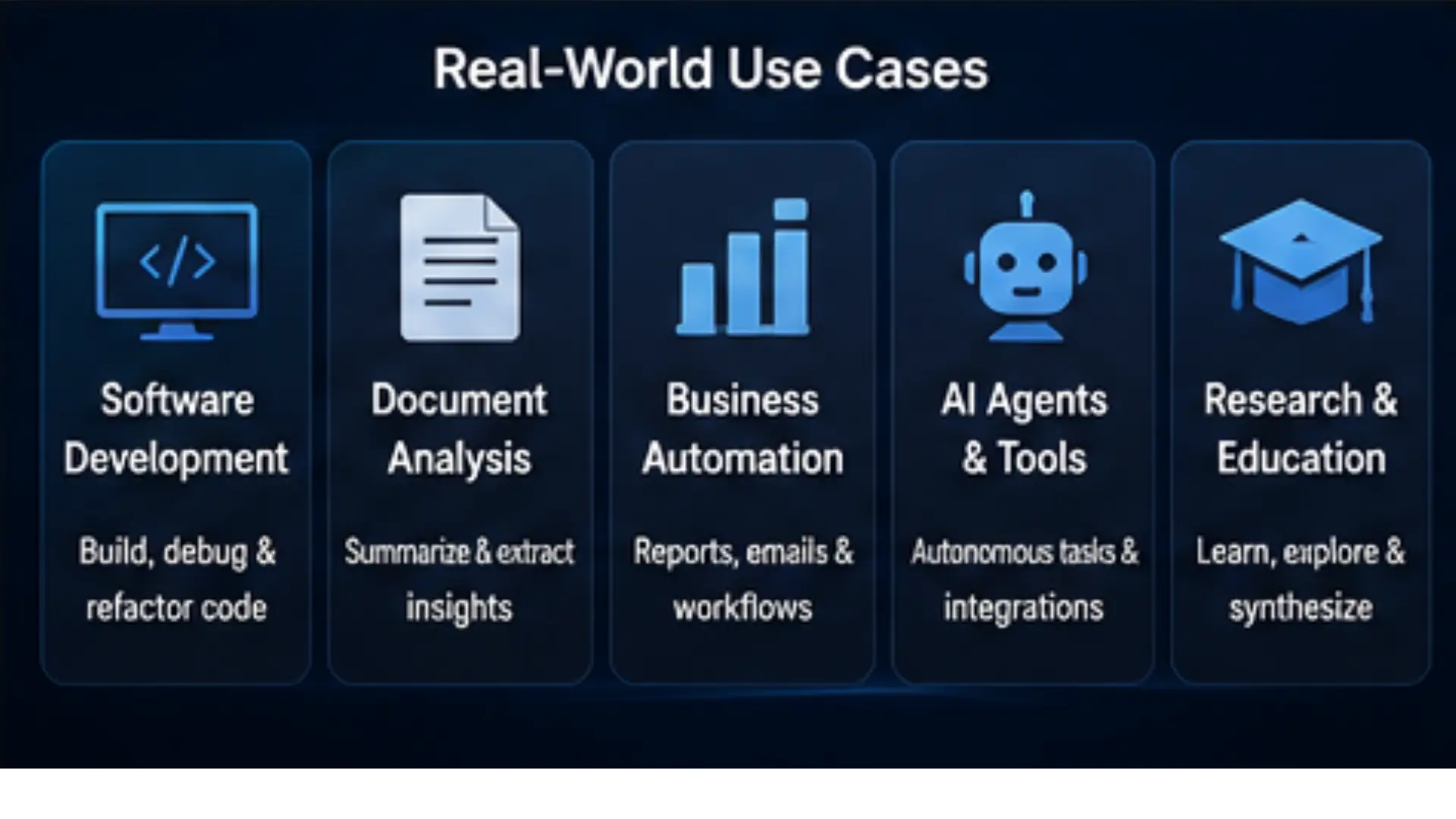
One of its strongest use cases is software development. Instead of generating isolated snippets of code, Qwen 3.8 is intended to assist throughout the entire development lifecycle. It can understand large repositories, explain unfamiliar codebases, debug existing applications, generate production-ready features, and even create technical documentation. This makes it particularly attractive for engineering teams looking to accelerate development while maintaining consistency across large projects.
Real Use Cases
Beyond software engineering, the model is well suited for enterprise document intelligence. Organizations routinely work with lengthy contracts, compliance reports, technical manuals, research papers, and financial documents that exceed the context limits of many existing AI systems. Qwen 3.8's focus on long-context processing enables it to summarize, analyze, and extract insights from these documents more efficiently, reducing the manual effort required for knowledge-intensive tasks.
Business automation represents another major opportunity. Companies can integrate Qwen 3.8 into internal workflows to automate meeting summaries, draft emails, generate reports, answer employee queries, and support customer service operations. Since the model can process multiple types of content—including text, images, videos, and documents—it provides a more comprehensive understanding of business data than text-only AI systems.
Current Limitations
Despite its impressive specifications, Qwen 3.8 is still an early preview and several important questions remain unanswered.
The biggest limitation is the absence of independently verified benchmark results. Without publicly available evaluations, it is difficult to determine exactly how the model compares with other frontier AI systems under standardized testing conditions.
Alibaba has also shared very little information about the model's training process. Details such as the size of the training dataset, data sources, active parameter count, and alignment methodology have not been disclosed. While this is common for many commercial AI models, the lack of transparency makes it challenging for researchers to fully evaluate the system's strengths and weaknesses.
Like all modern large language models, Qwen 3.8 is also expected to exhibit familiar limitations such as hallucinations, occasional factual inaccuracies, and sensitivity to prompt wording. Its multimodal capabilities introduce additional challenges, including the possibility of misinterpreting visual information. Developers should therefore continue validating model outputs, particularly in production environments or applications involving sensitive information.
How Does Qwen 3.8 Compare with Other Frontier Models?
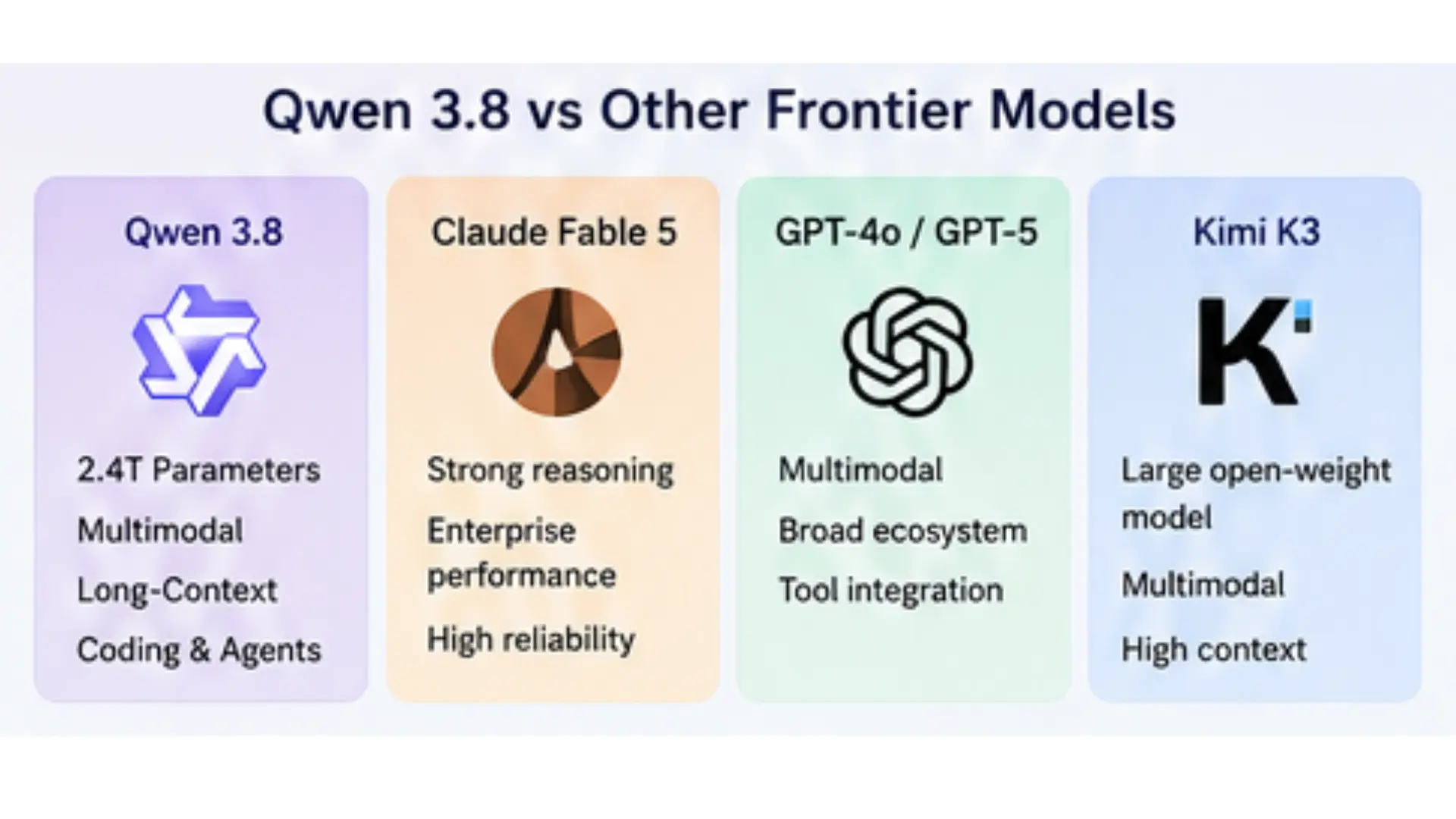
The competition among frontier AI models has become increasingly intense over the past year, with companies continuously releasing larger and more capable systems. Rather than competing solely on parameter count, today's leading models differentiate themselves through reasoning quality, coding ability, multimodal understanding, tool integration, latency, and overall user experience.
Model Comparison
Qwen 3.8 enters this competitive landscape as Alibaba's flagship model, emphasizing enterprise productivity, long-context reasoning, and advanced software engineering capabilities. While Anthropic's Fable 5 and OpenAI's latest GPT models continue to dominate enterprise adoption, Qwen 3.8 offers an alternative for organizations interested in Alibaba's growing AI ecosystem. Its support for multimodal inputs and agent-based workflows also places it alongside other next-generation models such as Moonshot AI's Kimi K3, highlighting the industry's shift toward AI systems capable of handling complete workflows instead of isolated tasks.
Conclusion
Qwen 3.8 represents Alibaba Cloud's most ambitious AI model to date. By combining a 2.4 trillion-parameter sparse Mixture-of-Experts architecture, native multimodal understanding, and a strong focus on long-context reasoning, Alibaba is clearly targeting enterprise-grade AI applications that extend well beyond traditional chatbots.
Although the model's specifications are impressive, several important aspects—including benchmark performance, licensing, safety evaluations, and training methodology—remain undisclosed. As a result, developers should approach the preview with both excitement and caution. The technology shows significant potential, but its real-world impact will become clearer once independent evaluations and the promised open-weight release are available.
For organizations building AI-powered products, coding assistants, document intelligence platforms, or autonomous workflows, Qwen 3.8 is undoubtedly a model worth watching. If Alibaba delivers on its roadmap and the model performs as expected under independent testing, Qwen 3.8 could become one of the most influential frontier AI models in the open ecosystem.
FAQs
What makes Qwen 3.8 different from previous Qwen models?
Qwen 3.8 is Alibaba Cloud's first trillion-parameter multimodal AI model, supporting text, images, videos, and documents. It also introduces a sparse Mixture-of-Experts (MoE) architecture for better efficiency and stronger performance in coding, reasoning, and enterprise workflows.
Is Qwen 3.8 open source?
Not yet. Qwen3.8-Max Preview is currently available through Alibaba Cloud's Token Plan. Alibaba has announced that an open-weight version will be released in the future, although the timeline and licensing details have not been confirmed.
What are the best use cases for Qwen 3.8?
Qwen 3.8 is designed for software development, long-document analysis, enterprise automation, AI agents, multimodal applications, and complex reasoning tasks that require understanding text, images, videos, and documents together.

Simplify Your Data Annotation Workflow With Proven Strategies
.png)