AI Coding Agents 10 Best AI Coding Agents in 2026 Explore the 10 best AI coding agents in 2026, including Claude Code, OpenAI Codex, GitHub Copilot, Cursor, and more. Compare features, benchmark performance, pricing, and use cases to find the right coding agent for your workflow.
Gemini 4 Argon Gemini Argon 4 for Robotics: 7 Key Demos & Features Explore seven Gemini 4 Argon robotics demos, from zero-shot robot control and Real2Sim physics simulations to automated data labeling and self-improvement. Learn how its reasoning loop could transform robotics development.
Meta Muse Wonder: Key Features and Details Explore the key features, benchmarks, and pricing of Meta's Muse Wonder AI. Discover how Active Memory and Active Focus turn this frontier model into an autonomous digital worker for complex coding and knowledge workflows.
Anthropic AI How Claude Haiku 5.5 Redefines Lightweight AI Explore the key differences between Claude Haiku 5.5 and Haiku 5. Anthropic's newest model delivers blazing execution speed, advanced safety boundaries, and significantly lower token costs. Learn how upgrading to Haiku 5.5 can optimize your automated workflows and reduce API latency today.
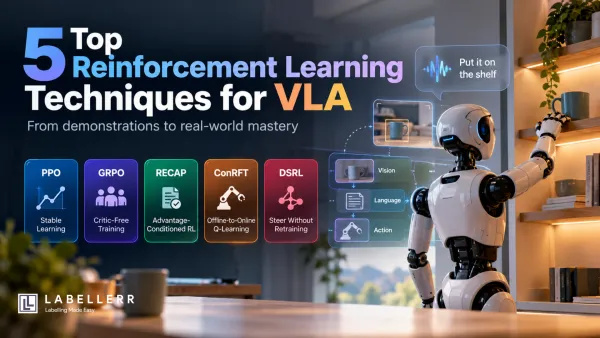
Vision-Language-Action 5 Top Reinforcement Learning Techniques to Train VLA Models Explore five reinforcement learning techniques for vision-language-action models: PPO, GRPO, RECAP, ConRFT, and DSRL, with results, training approaches, and practical use cases.
Claude Sonnet 5.5 Claude Sonnet 5.5 vs Sonnet 5: Benchmarks, Pricing & More Claude Sonnet 5.5 delivers a dramatic leap over Sonnet 5 across coding, knowledge work, computer use, and visual tasks. Explore benchmark results, real-world testing, pricing, performance, and what changes for developers.
OCR GLM-OCR vs PaddleOCR: A Hands-On Comparison of Two VLM OCR Models Compare GLM-OCR and PaddleOCR side by side using LM Studio on receipts, math formulas, pie charts and curved-text logos. See which VLM OCR model performs better.
computer vision model training 10 Top Computer Vision Model Training Service Providers 2026 Discover the top computer vision model training platforms in 2026 that streamline annotation, automate QA, and enable fast deployment. Compare tools built for scalable, production-ready AI workflows.
ChatGPT GPT-6 Sol and Luna: OpenAI’s New Frontier in Cost-Efficient AI Discover the release of OpenAI's GPT-6 Sol and GPT-6 Luna. Learn how these new AI models bring the architectural breakthroughs of GPT-6 Astra to more accessible price points, offering massive gains in coding, computer use, and enterprise workflows at 50% of the cost.
Claude Opus 5.5 Claude Opus 5.5 vs Opus 5: Key Differences Claude Opus 5.5 is Anthropic’s latest frontier AI model, designed for advanced agentic coding, reasoning, knowledge work, and complex long-running tasks. It delivers stronger performance, faster output, improved safety, and lower costs than Opus 5.
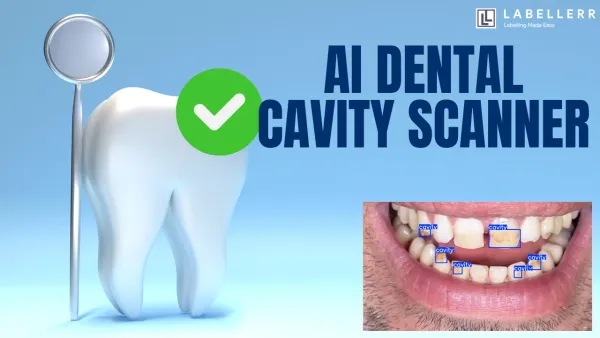
AI in healthcare AI Dental Assistant: Real-Time Cavity Detection Explore how we built a real-time AI Dental Assistant using the YOLO11 object detection model. This computer vision pipeline automates cavity tracking in live video feeds, highlighting tooth decay instantly to improve diagnostic speed and assist dentists in modern clinical workflows.
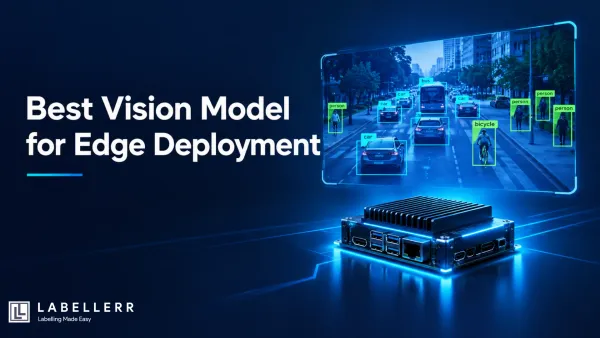
best vision model for edge deployment Best Vision Model for Edge Deployment (2026 Benchmark) We benchmarked YOLO26-N, YOLOv12-N and RF-DETR-Nano on FPS, latency, VRAM and detection count. See which nano model is the best vision model for edge deployment, and when the extra memory of a transformer detector is worth it.
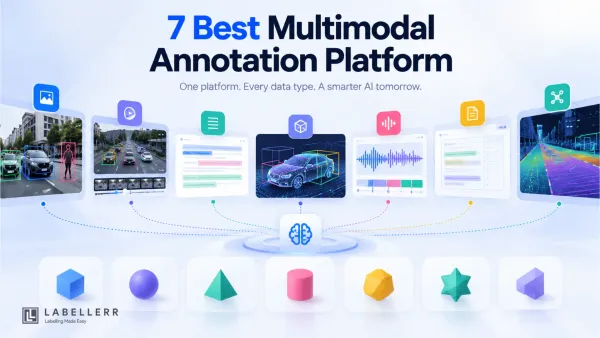
Multimodal Annotation 7 Best Multimodal Annotation Service Providers in 2026 Explore the seven best multimodal annotation platforms in 2026 and learn how they handle video, audio, text, LiDAR, 3D data, AI automation, quality workflows, and enterprise annotation needs.
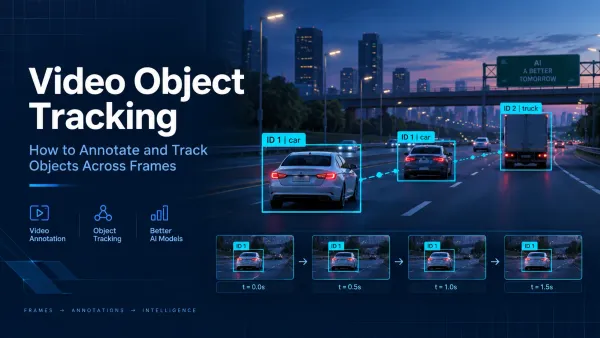
video object tracking Video Object Tracking: How to Annotate and Track Objects Across Frames Video object tracking lets AI systems follow objects across frames, not just detect them in a single image. This guide covers annotation types, tracking techniques, key challenges like occlusion, and how Labellerr streamlines the workflow.
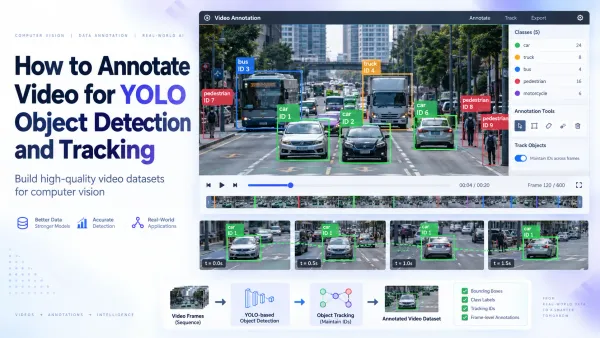
YOLO Object Detection How to Annotate Video for YOLO Object Detection and Tracking (2026 Guide) Learn how to annotate video for YOLO object detection and tracking, from bounding boxes and tracking IDs to AI-assisted labeling and exporting into a YOLO training-ready dataset.
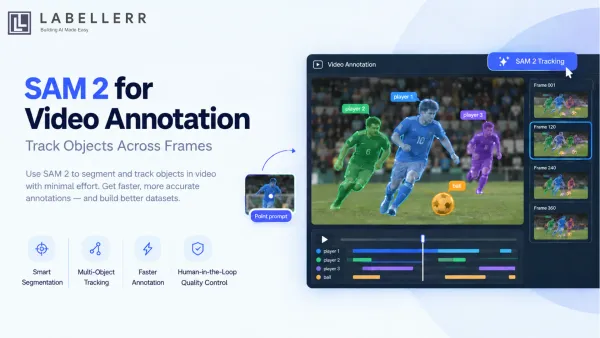
SAM 2 video annotation SAM 2 for Video Annotation: Track Object Across Frames SAM 2 makes video annotation faster by using prompts to segment and track objects across multiple frames. Learn how SAM 2 works for video object tracking, handle challenges like occlusion and motion blur, and use SAM 2 for AI-assisted video annotation in Labellerr.
GPT-6 Astra: The Rise of AI Agents Discover how OpenAI's GPT-6 Astra is revolutionizing AI by moving beyond text generation. This deep dive explores its groundbreaking computer-use capabilities, recurrent depth reasoning, benchmark dominance, and how it acts as an autonomous digital worker for enterprise workflows.
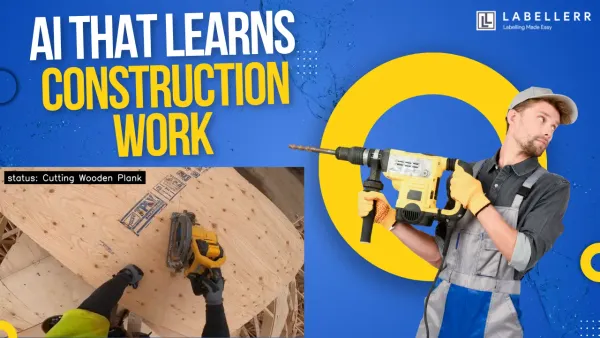
Construction Step Timeline Detector Discover how we built an automated vision pipeline using YOLO11 to detect first-person construction steps. This system turns raw egocentric video into structured task timelines, improving workflow safety and providing crucial training data for physical AI robots.
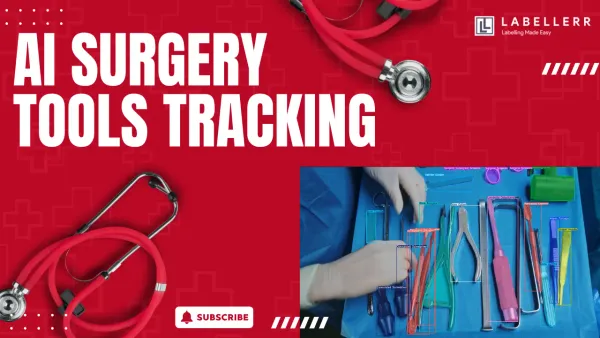
computer vision Why Surgeons MUST Verify With AI Before Operating Missing tools cause dangerous mid-surgery delays. Discover how we built an automated vision system using YOLO 11 to precisely segment and track 11 distinct surgical instruments in real-time 4K video, guaranteeing a perfect tray setup before operations even begin.
Gemini Robotics 2 Gemini Robotics 2: The AI That Gives Robots a Brain Gemini Robotics 2 combines reasoning, vision-language-action, and on-device models to help robots plan, adapt, and perform complex physical tasks across humanoid and multi-robot platforms.
Kimi K2.6 Kimi K2.6 Is Open to Everyone - And It's a Big Deal Kimi K2.6 is a fully open-source agentic AI model built for long-running tasks, multi-agent coordination, and real-world coding performance. It rivals top closed models while enabling autonomous execution at scale.
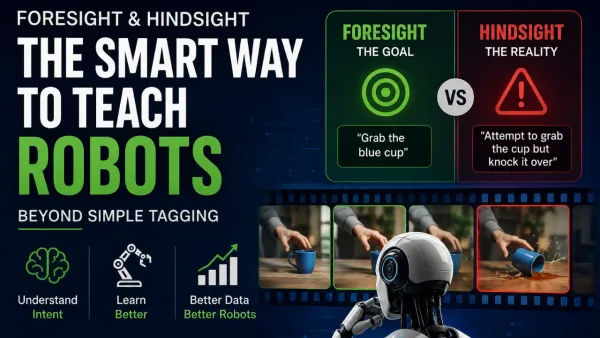
Physical AI How Smart Video Tags Build the Real Future of Physical AI Discover how splitting video annotation into Foresight (intent) and Hindsight (reality) fixes data bottlenecks in physical AI. Learn why this dual-tagging system prevents robots from copying human mistakes and shapes the future of autonomous machines.
Muse Glimmer Muse Glimmer 30B: The New Local AI Agent Muse Glimmer 30B brings capable agentic AI to consumer hardware, offering local tool use, reasoning, multimodal input, and failure recovery without cloud dependency. Explore its architecture, benchmarks, hardware requirements, and deployment options.
nvidia NVIDIA Nemotron 3.5 Lightning: High Speed, Low Cost AI Agents Discover NVIDIA Nemotron 3.5 Lightning, an open 30B Mixture-of-Experts model with 3B active parameters built for fast, low-latency execution in long-running AI agents. Learn about its speculative decoding, NVFP4 quantization, NeMo Switchyard routing, and key performance benchmarks.
Meta AI Muse Spark 1.2: Meta's Next-Gen Coding AI Explore Meta’s Muse Spark 1.2 and Muse Code terminal agent. Discover how its 1M+ token context window, goal conditioning, async background agents, and multimodal capabilities transform long-horizon software development and GPU kernel optimization.