
How Smart Video Tags Build the Real Future of Physical AI
Discover how splitting video annotation into Foresight (intent) and Hindsight (reality) fixes data bottlenecks in physical AI. Learn why this dual-tagging system prevents robots from copying human mistakes and shapes the future of autonomous machines.
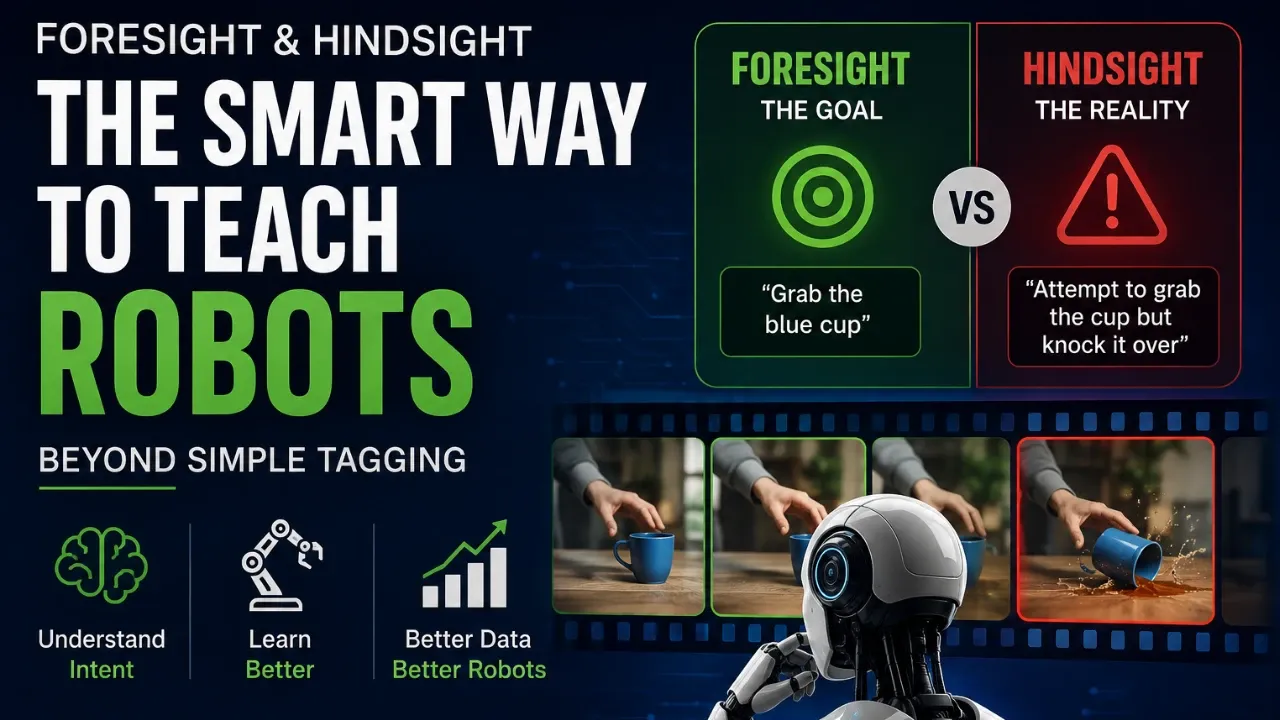
Building smart robots is a massive challenge for engineers today. We want to build large machines that can fold clothes, cook meals, and clean floors. To teach these physical robots, teams use huge piles of video clips. These long videos show human actors doing daily home tasks. However, these raw videos present a huge problem. Real humans are messy and clumsy. People shake their hands, drop heavy plates, and grab wrong items. If we feed this messy film into a new robot brain, the robot learns terrible habits. It learns that dropping a clean plate is the right way to dry dishes.
To fix this massive data jam, smart data teams use a deep tagging ruleset. This strict system splits every video event into two clear halves. One half tracks the human intent, and the other half tracks the real physical outcome. We call this the foresight and hindsight split system. This new setup is far better than old simple video tagging. It shapes the entire future of physical artificial intelligence. This post explains exactly how this works, gives real research data, and shows why simple tags fail.
Why Simple Event Tagging Fails Modern Robots
In the past, data workers used a fast method called simple event tagging. They watched a short video clip and wrote one simple sentence. They just wrote exactly what the video showed. There was no deep split between a goal and a harsh reality. This old method creates huge blind spots for modern robots.
Imagine a man reaching for a blue coffee cup. He swings his arm too fast and knocks the cup over. In simple event tagging, a worker writes, "Knocking over a blue cup." The robot reads this text and links it to the arm motion. The computer thinks the man actually wanted to knock the cup down. It fully misses the true human goal.
When a robot only sees simple tags, it copies human mistakes perfectly. It learns to fail. Modern machines must know the clear difference between a smart goal and a clumsy arm swing. We need a way to log the good dream and the bad reality at the exact same time.
The Five Core Fields of Smart Tagging
To solve the clumsy human problem, data experts chop long videos into tiny blocks. Every block captures one single meaningful action. There are no blank time gaps between the video blocks. For every single block, the human worker must fill out five specific text fields.
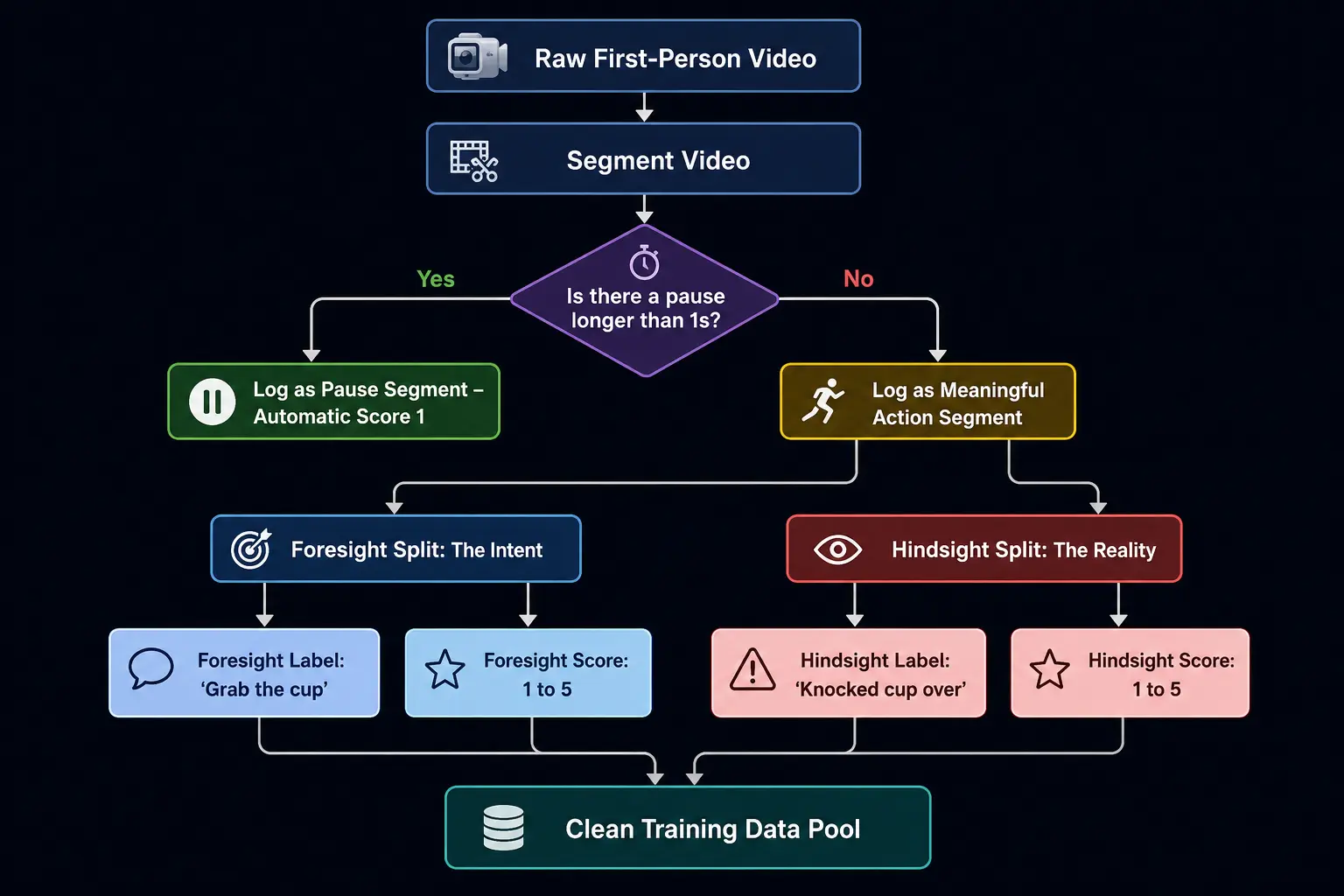
Splitting raw video into training data
These five fields create a perfect data map for the computer brain. The robot learns to read both the mind and the body of the human actor. Here are the five fields every worker must use:
- Time Range: The exact start and end time of the short action.
- Foresight Label: The pure human intent before the action finishes.
- Foresight Optimality: A strict number score grading the final task success.
- Hindsight Label: The harsh reality of what actually happened.
- Hindsight Optimality: A number score grading the physical arm motion.
| Field Name | What It Really Means | Example Video Action |
| Time Range | The tight video clock limits | Twelve to fifteen seconds. |
| Foresight Label | The planned dream goal | Grab the red book. |
| Foresight Optimality | Did the actor hit the goal? | Five for a win, one for a fail |
| Hindsight Label | The final real world truth | Reached but dropped the book |
| Hindsight Optimality | Was the raw motion smooth? | Five for smooth, one for shaking |
Deep Dive: Foresight Tags and the Goal
Foresight is all about human intent and future goals. This text tag completely ignores the final physical outcome of the video clip. The worker must write the foresight label before they know how the clip ends. If a man reaches for a door, the tag is always "Grab the door." It does not matter if the man trips and falls. The mental intent stays exactly the same.
This smart intent tag is vital for robot model training. It trains the artificial intelligence to guess the very next logical step. The machine learns to read a kitchen scene, track a human hand path, and guess the right goal. It learns what humans want to do, even when humans fail.
We grade this human intent using the foresight optimality score. This strict number runs from one to five. It grades how perfectly the real physical action matched the dream goal. A pure success gets a five. A dropped item always gets a one, no matter what.
| Foresight Score | What the Score Means | Video Example |
| 5 | Total Success | The goal was perfectly met |
| 4 | Tiny Issue | The goal was met with a slight pause |
| 3 | Noticeably Bad | The goal was met, but it looked poor |
| 2 | Very Poor | A huge struggle to meet the simple goal |
| 1 | Full Failure | The item dropped or the hand missed |
Deep Dive: Hindsight Tags and the Reality
Hindsight is the harsh physical reality of the video tape. It forces the data worker to write down exactly what happened in the real world. This text includes all human flaws, mistakes, and drops.
If the human completes the task perfectly, the data worker types a single dash mark. This tiny dash tells the robot brain that the real world matched the dream goal. However, if the man knocks over the blue cup, the worker must write out the mistake. The text becomes, "Attempt to grab the cup but knock it over."
We then grade this physical reality using the hindsight optimality score. This score is fully separate from the main task success. It only grades how clean, smooth, and confident the body motion looked.
| Hindsight Score | What the Score Means | Video Example |
| 5 | Perfect Motion | Clean, confident, and very smooth arm path |
| 4 | Tiny Flaw | Smooth path but slightly slow motion |
| 3 | Noticeable Flaw | Very slow motion or awkward hand angles |
| 2 | Bad Motion | Tiny shaking motions and weird corrections |
| 1 | The Worst | Extreme hand shaking and heavy stalling |
Filtering Data: How It Helps Models Run Better
This split number system acts like a powerful trash filter for bad data. Engineers can tell the main computer to ignore all video clips with low hindsight scores. This instantly deletes all shaky, jittery, and weird human movements from the giant training pool. The robot only learns from perfect physical movements.

How hindsight scores filter bad data
New research shows how vital this data filtering really is. Engineers use power spectral density tools to find erratic, shaky hand trajectories. When they remove these bad paths from the data pool, the robot runs far better. Tests show that cleaning data this way gives policies a much higher task success rate. The robot moves smoothly because the messy human data is totally gone.
The Real World Numbers and Research Data
How much better is this split system compared to normal tags? Modern science research provides amazing proof. When engineers test robots using foresight and hindsight logic, the machines get much smarter.
One major study tested the Act2Goal framework, which uses hindsight to help robots learn. The real robot experiments showed a massive jump in pure skill. The split logic pushed robot success rates from a low thirty percent up to a massive ninety percent on hard, new tasks. The robot adapted fast because it knew the true goals.
The system also runs faster than old methods. Old simple tag models tried to read many past video frames at the same time to guess the future. This old style was 3.15 times slower than new motion models. It also ate up 2.06 times more heavy computer memory. By tracking smart foresight motion, the new system stays fast and light.
We also see huge wins in video data collection speeds. Engineers need lots of failure videos to teach robots how to fix mistakes. But making a real robot fail takes a long time. When humans act out the failures on video, it is much faster. Studies show that human operators generate more than ten times as much valid recovery data per hour compared to a robot working alone. This fast human data teaches the robot how to correct its own physical mistakes.
We can track this power on the famous Ego4D video test board. This huge test checks if a robot can guess future human actions. In a recent massive challenge, the top model scored an amazing overall action edit distance of zero point eight four nine three. The noun edit distance was an incredible zero point five nine eight six. A lower score means the robot guessed the future actions much better. Smart action guessing easily beats old simple tags.
Handling Hard Cases: Misses and Retries
Real home videos contain very complex problems. The split tag system works best when things go horribly wrong on the tape.
Imagine a woman reaches for her car keys but grabs empty air. She completely misses the target keys. In our smart system, the foresight score drops to a strict one. The task failed totally because she made zero physical contact. However, her arm motion was very smooth and normal. So, the hindsight score stays at a perfect five. The computer learns a huge lesson here. It learns that smooth arms are good, but grabbing thin air is a total task failure.
Often, a human drops an object and tries to pick it up a second time. The tagging rules handle this in a very clever way. The worker logs the first drop as one short time clip. They then log the new attempt as a brand new time clip.
The data worker must copy the exact same foresight text for both video clips. The dream goal never changed at all. The human still just wants to pick up the dropped item. The hindsight text will clearly show the bad drop in clip one. It will then show the good success in clip two.
This retry loop teaches the robot how to recover from a huge physical error. The computer sees a bad failure state. It realizes the main goal still exists in the room. It then maps the new physical path to try the grab again. Using human recovery data pushes the robot recovery success rate up to eighty five point zero. Without this clear intent data, the robot success rate drops fast to sixty five point zero.
Shaping the Final Future of Physical AI
This strict tagging format is not just boring busywork. It is the absolute core block for building modern physical agents. Companies making smart factory machines, home helper bots, and self driving cars need this perfect data.
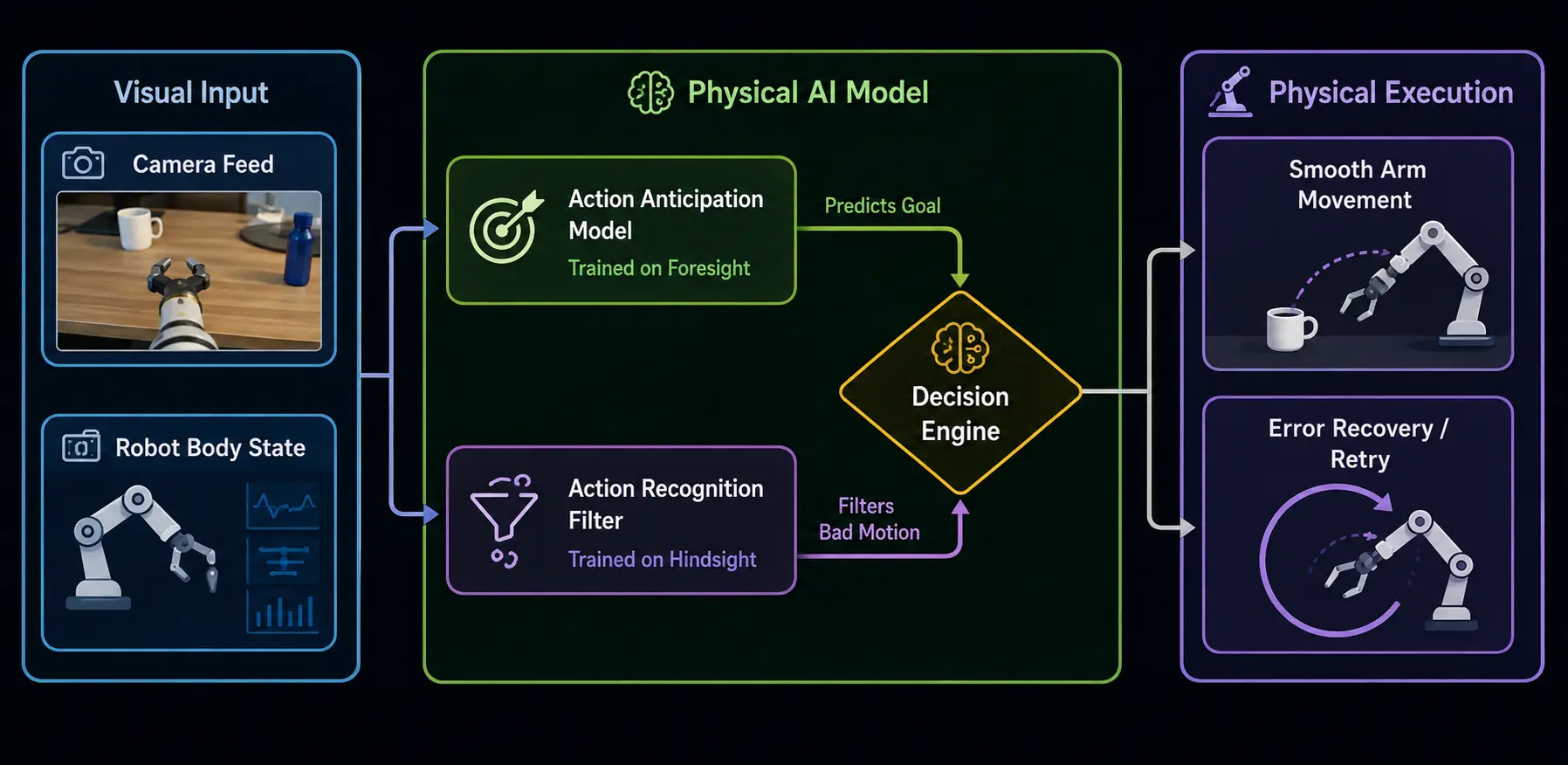
Turning split tags into robot actions
When you split human intent from physical reality, you give the computer a true map of the world. The robot learns to guess goals based on early hand paths. It learns to quickly filter out shaky, bad human examples. It learns exactly how to fix a problem when a grip slips or a plate falls.
Dense video text turns a messy, chaotic room into a clean, readable math sheet. By demanding perfect precision and separate number scores, teams ensure the next wave of robot brains learn the best habits. Simple tags just pass human flaws onto the robot. The deep split system creates a machine that is smarter, smoother, and much safer than the human actor. The entire future of physical artificial intelligence relies heavily on the strict split of foresight and hindsight.
FAQ
Why do we split video tags into foresight and hindsight?
Splitting tags separates human intent from the actual physical reality. This ensures that AI models learn the correct goal, rather than copying clumsy human mistakes or failed attempts.
What happens if an action fails during video annotation?
If an action fails, the foresight optimality scores a 1 because the intended goal was not achieved. However, the hindsight optimality can still score a 5 if the physical motion itself was smooth and executed cleanly.
What does "memoryless" mean in video data labeling?
A memoryless caption must fully describe its time range on its own without relying on earlier video segments. Annotators must avoid vague words like "it" or "back" and instead explicitly name the exact objects and locations.

Simplify Your Data Annotation Workflow With Proven Strategies
.png)