
9 Key Places to Integrate Decision Models in Agentic RAG
Discover how decision models are transforming agentic RAG systems by replacing expensive text-generation judges with fast, probability-based verdicts across nine critical workflow gates from prompt routing to citation checking and context compaction.

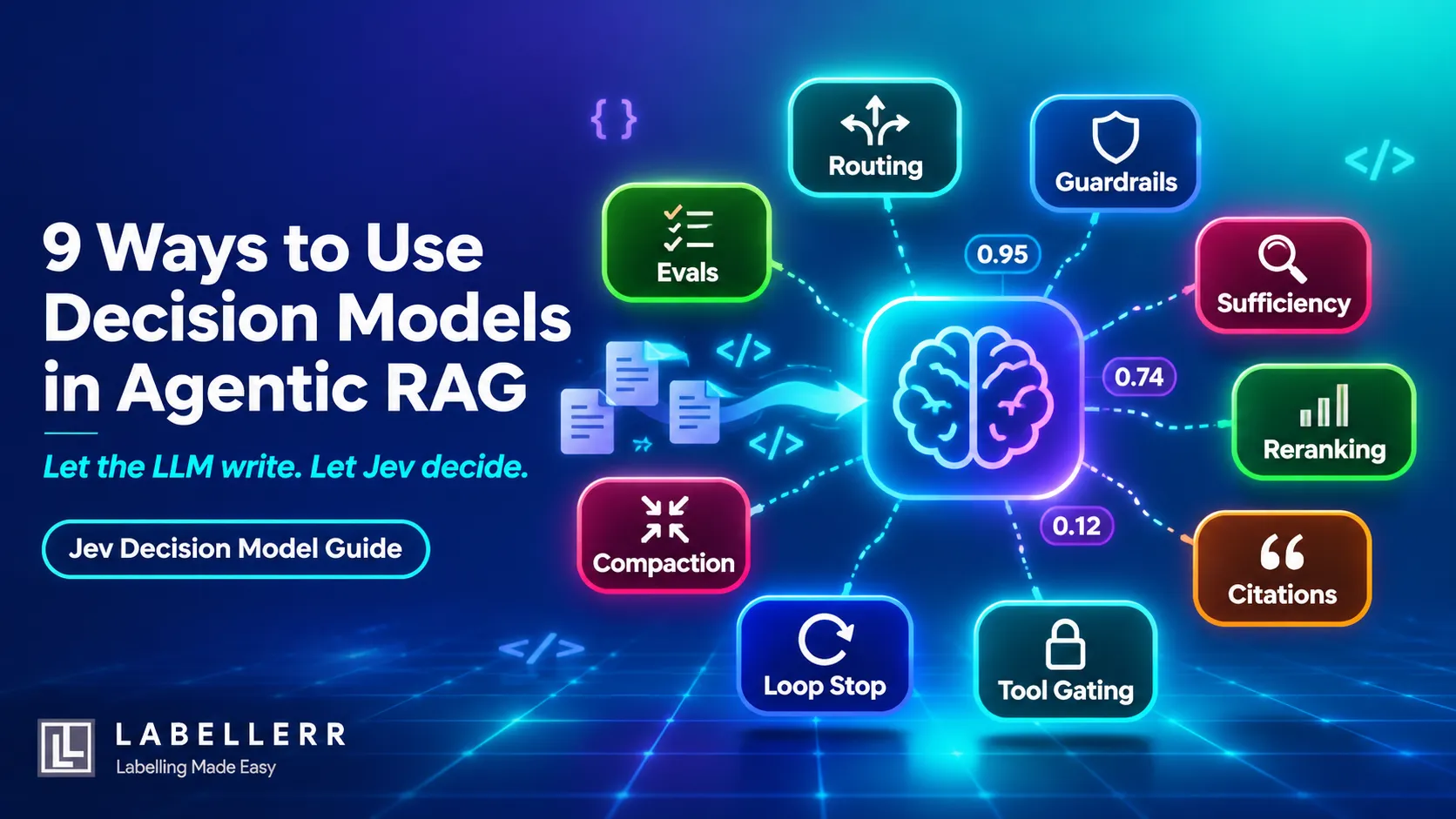
Most agentic RAG pipelines pay a large language model to answer questions that only need a yes or a no.
Is this passage relevant? Should the agent search again? Is this tool call safe? Each check can take several seconds when a full LLM generates its reasoning, and those delays multiply across every step of every request.
A new class of AI model solves this problem. Decision models skip text generation entirely and return a probability instead. Below are the nine places where they deliver the most value in an agentic RAG system, from the first prompt to the final evaluation.
What Is a Decision Model?
A decision model is an AI model that selects from options you define instead of generating text. You send it the current state and a question, and it returns a probability for each possible answer.
The best-known example is Jev from TypeSafe AI, which launched on September 15, 2026, alongside a $40 million seed round led by DCVC. CEO Diogo Almeida previously worked on InstructGPT and ChatGPT at OpenAI.
Jev supports three question types:
- Noul: a yes-or-no question that returns a probability from 0 to 1.
- Choice: picks one option from a list of up to 255.
- Score: places the input on a scale of 2 to 10 levels.
Pricing is $0.042 per million input tokens, and output is free. In a guardrail experiment by Arize, Jev returned a median response in 104 ms, while GPT-5.4 nano required 1,915 ms. Open-weight alternatives also exist, including Laya and Liquid AI's d1-3B.
The Architecture: Where Decision Models Sit in Agentic RAG
In an agentic RAG system, the LLM still writes the final answer, while the decision model acts as a referee at every gate along the way.
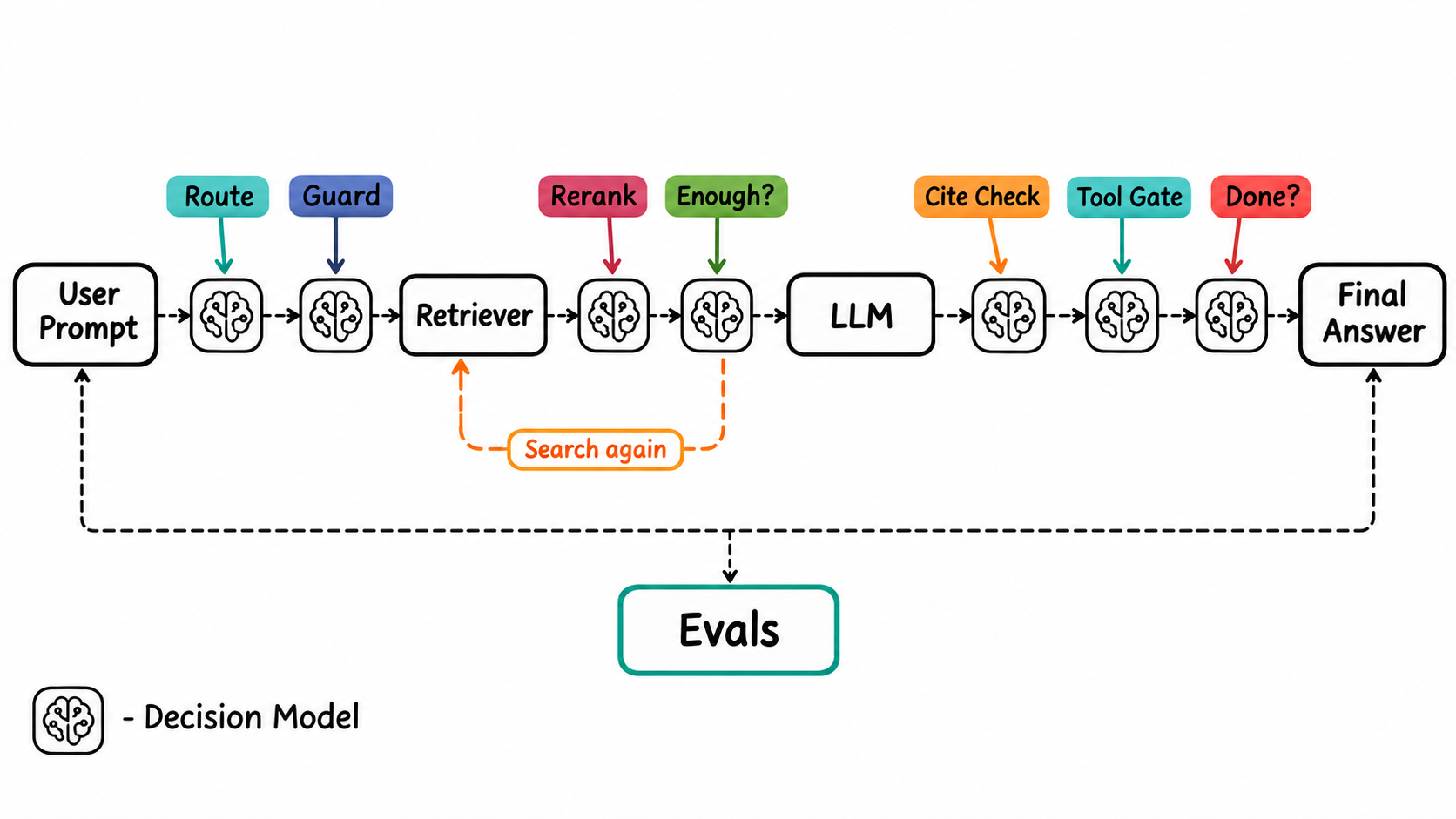
Architecture
Here is how a request flows from front to back. A router first selects the model tier, and guardrails screen the incoming input. The retriever then fetches passages, a reranker scores each candidate, and a sufficiency check decides whether to answer or search again.
Next, the LLM writes a draft, and a citation checker tests every claim against its source. When the agent wants to act, a gate approves or blocks each tool call, and a termination check decides when the loop is complete. Across long sessions, compaction removes stale context, while evals grade every trace offline.
Every gate returns a probability, and your application code holds the thresholds. This design keeps your policy in testable code instead of burying it inside a prompt.
9 Places to Use Decision Models in Agentic RAG
1. Model Routing
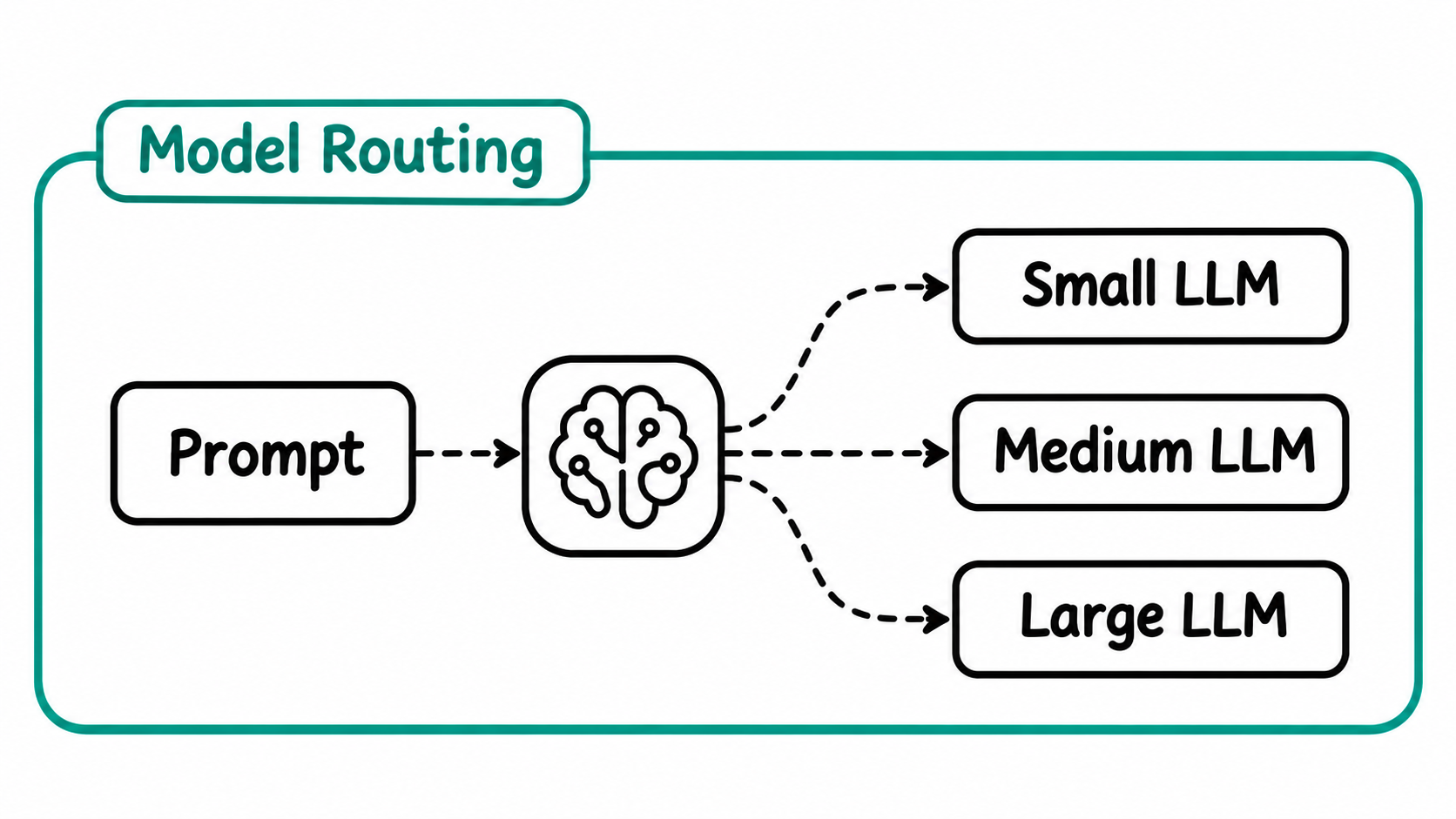
The prompt reaches a decision model first, and the model selects the appropriate tier. Inexpensive models handle simple lookups, while premium models handle answers you cannot afford to get wrong.
Use a Choice question with options such as small, medium and large. In one implementation by The AI Automators, a routing call consumed just over 400 input tokens, which costs a tiny fraction of a cent at Jev's pricing.
Model Routing
2. Guardrails
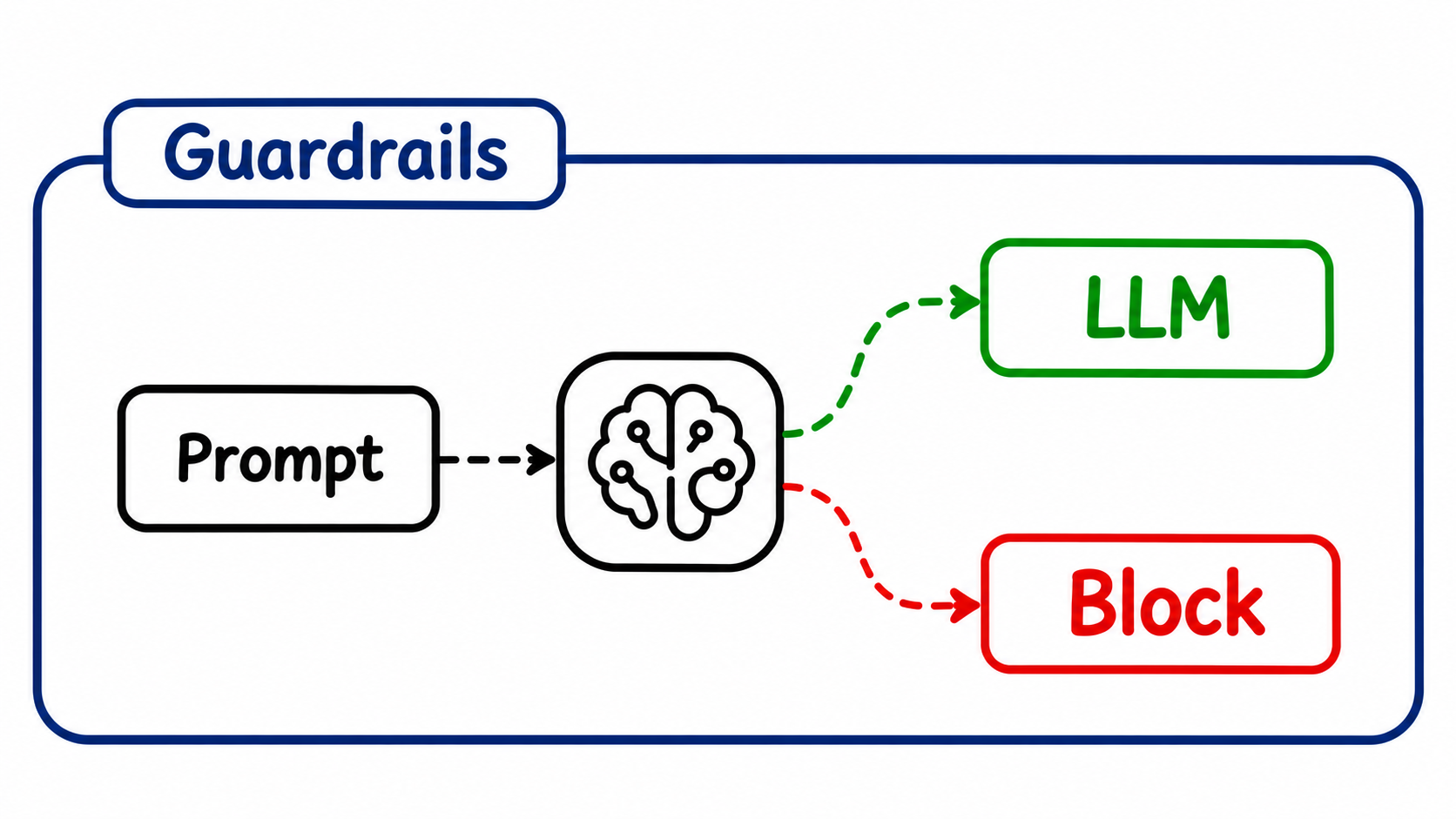
A guardrail asks one yes-or-no question for each potential hazard, such as prompt injection or private data leakage. You can run it before the LLM sees the input or on the answer it has already produced.
A Red Hat benchmark from October 2026 found that Jev scored 86.20% on content safety, the highest result in that test. However, a small pre-trained classifier was both faster and more accurate at catching prompt injection, so evaluate both options.
Guardrails
3. Retrieval Sufficiency
After retrieval, the agent needs one answer: is this evidence sufficient, or should it search again?
A Noul question fits this step perfectly. A Daily Dose of Data Science project used this exact pattern with an open-weight decision model, retrying once with a wider search when no passage passed the gate. If the second attempt also failed, the system opened a support ticket instead of guessing.
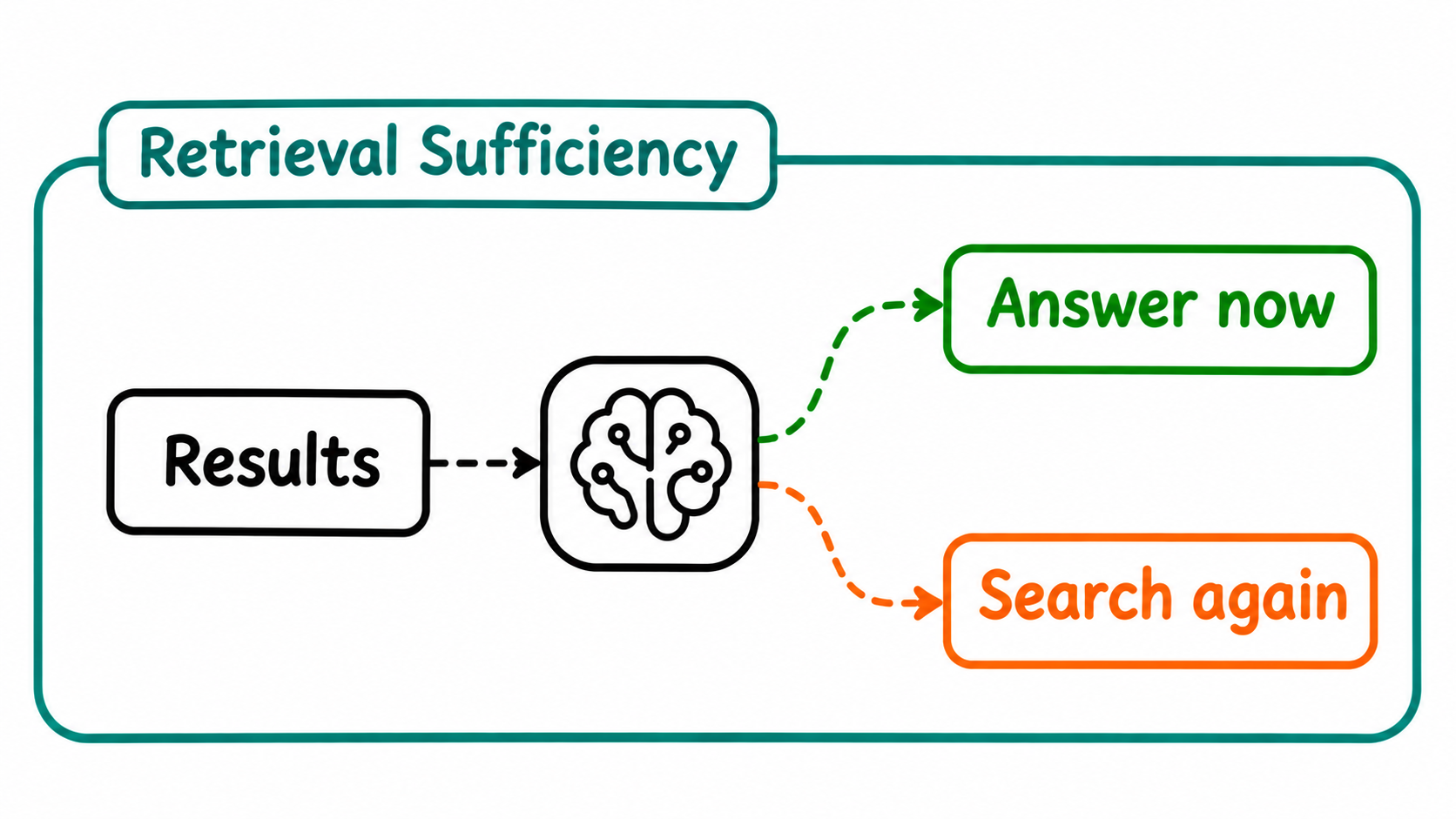
Retrieval Sufficiency
4. Passage Filtering and Reranking
Does this passage actually answer the question, or does it merely share keywords? Ask that question for every candidate, then sort the results by probability.
In The AI Automators implementation, Jev scored 60 retrieved chunks using almost 30,000 input tokens, at an estimated cost of roughly one tenth of a US cent.
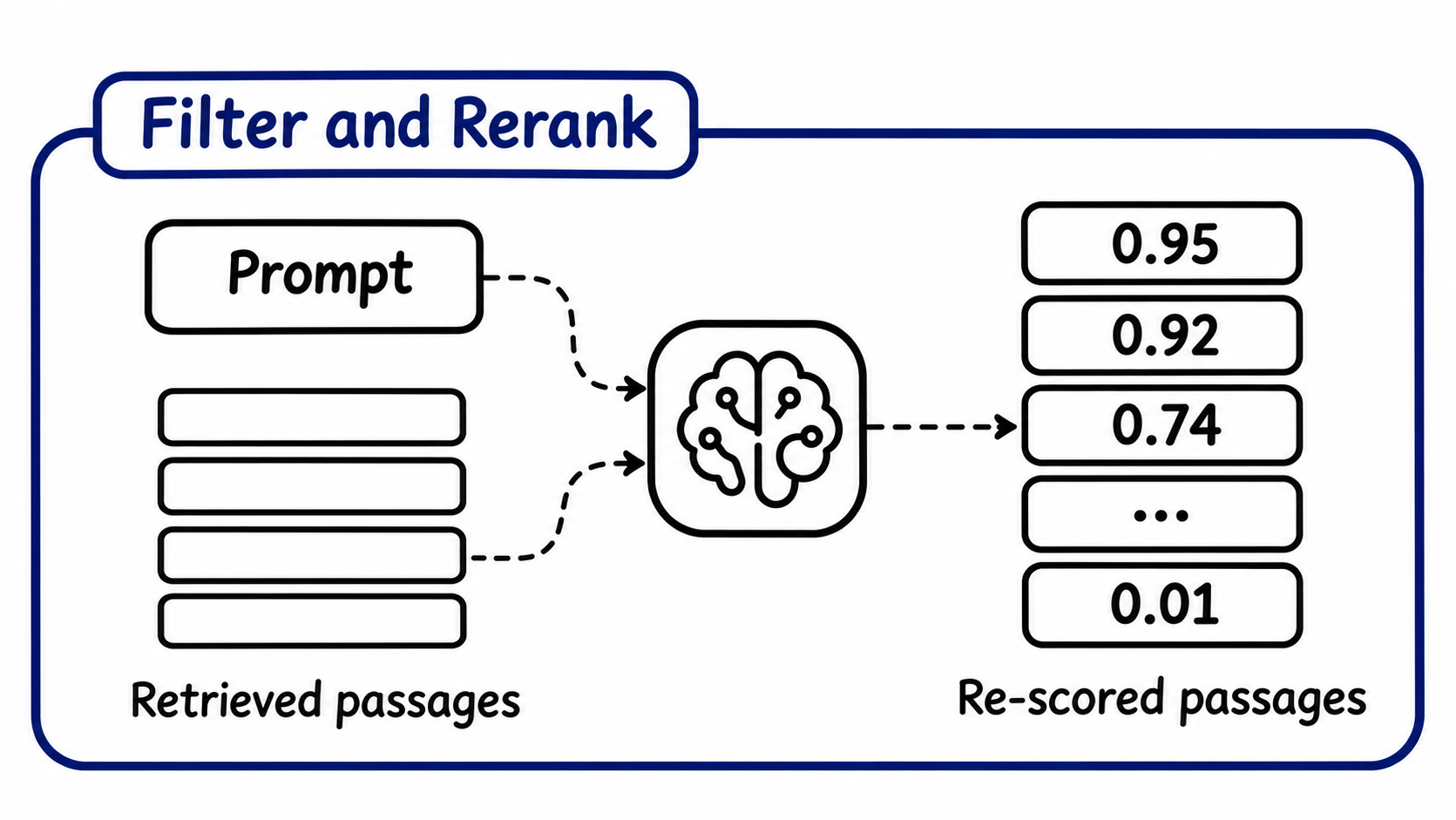
Passage Filtering and Reranking
5. Citation Checking
Does this source support the claim, contradict it, or fail to address it? A Choice question with three options answers this cleanly.
This step catches responses that cite a genuine source for a statement the source never made. In one build, a fully supported claim scored 82%, while a partially supported claim scored 57%, giving developers a clear signal for action.
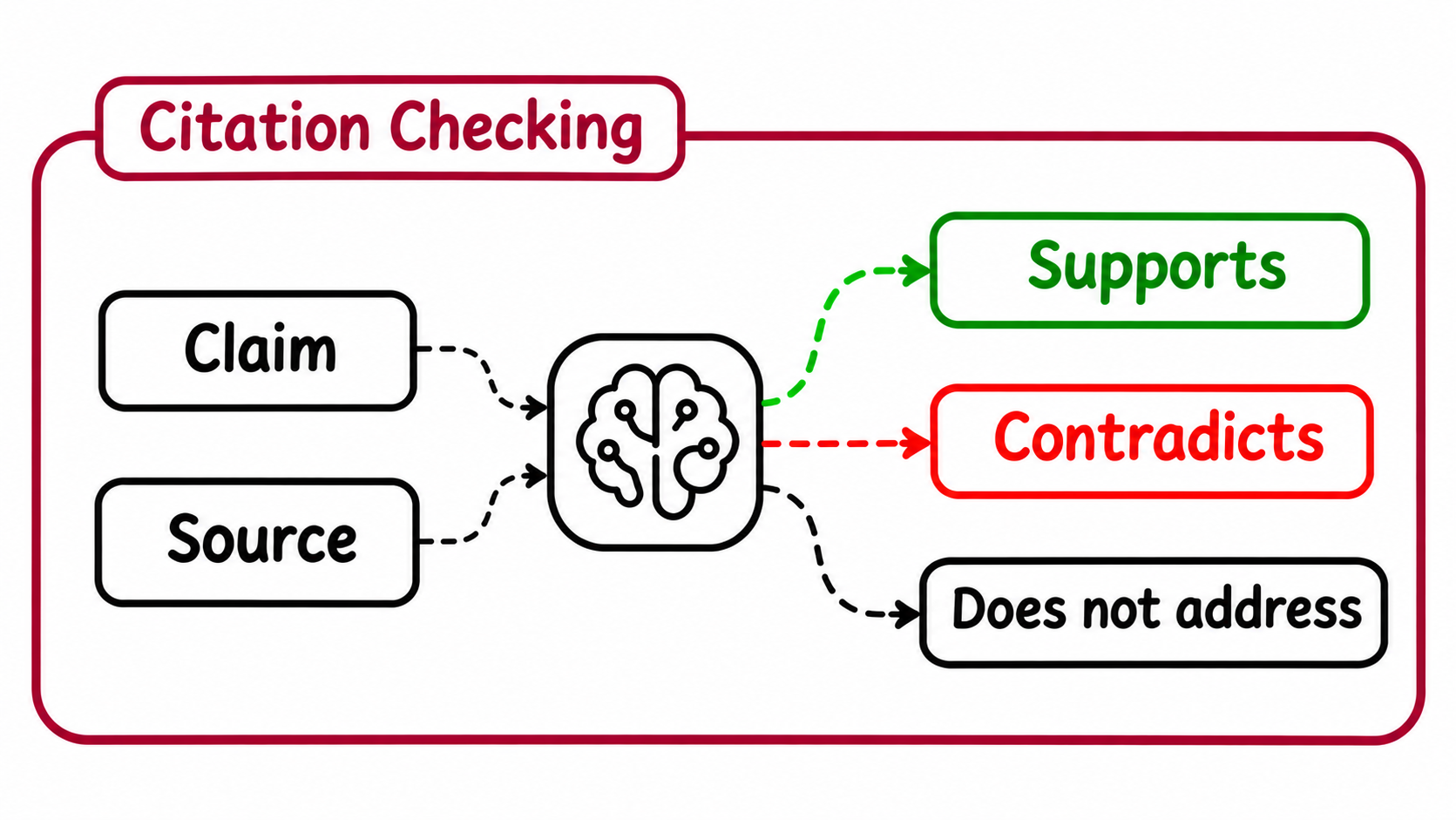
Citation Checking
6. Tool-Call Gating
Before an agent executes a tool, score the call and then allow it, escalate it to a human, or deny it.
Keep the probability bands in your code. For example, you might allow calls above 0.9, escalate between 0.6 and 0.9, and deny everything else. Arize used a similar setup to screen inbound messages, draft replies and tool arguments, and Jev matched the LLM judge on every check in that demo.
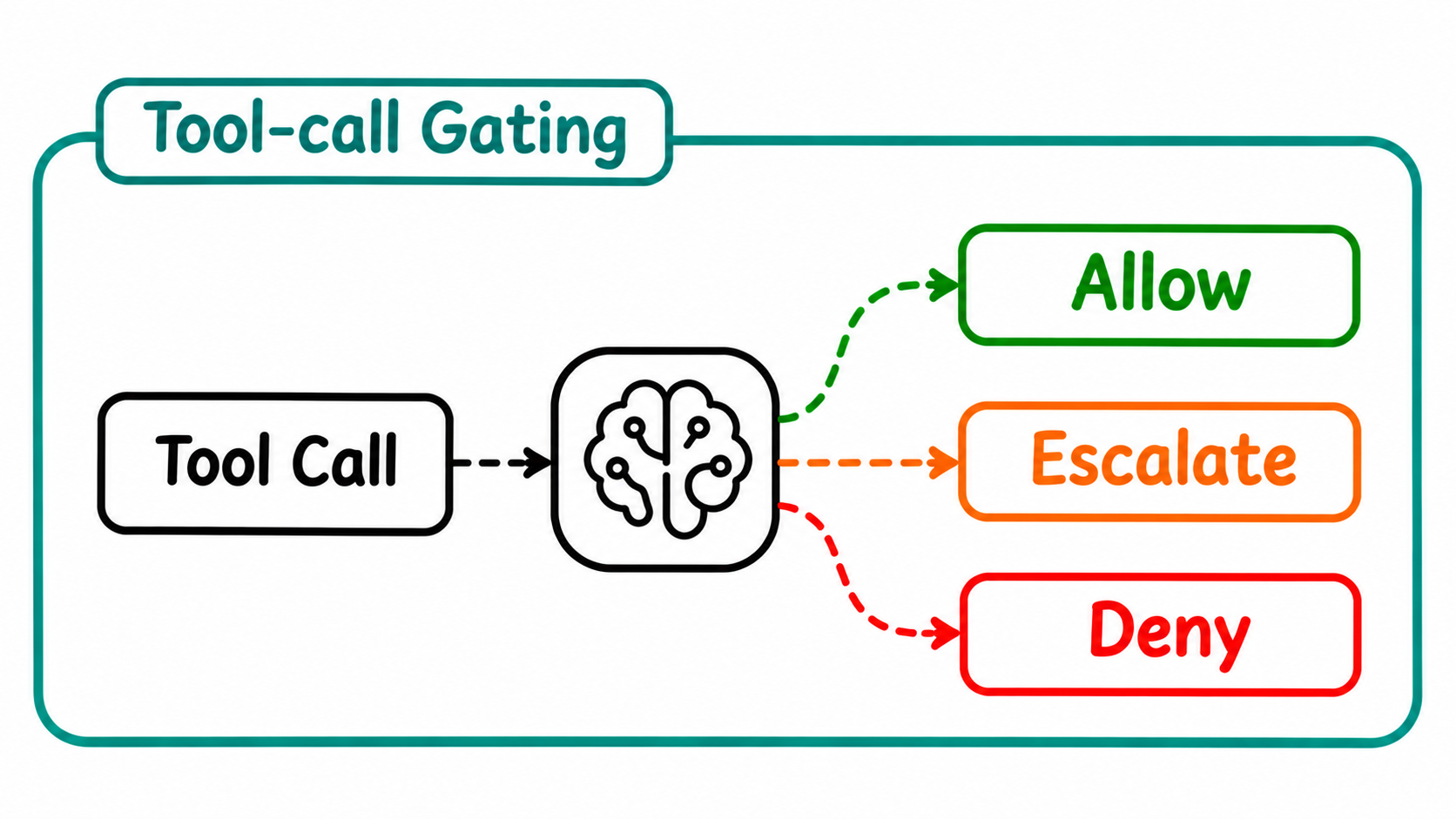
Tool-Call Gating
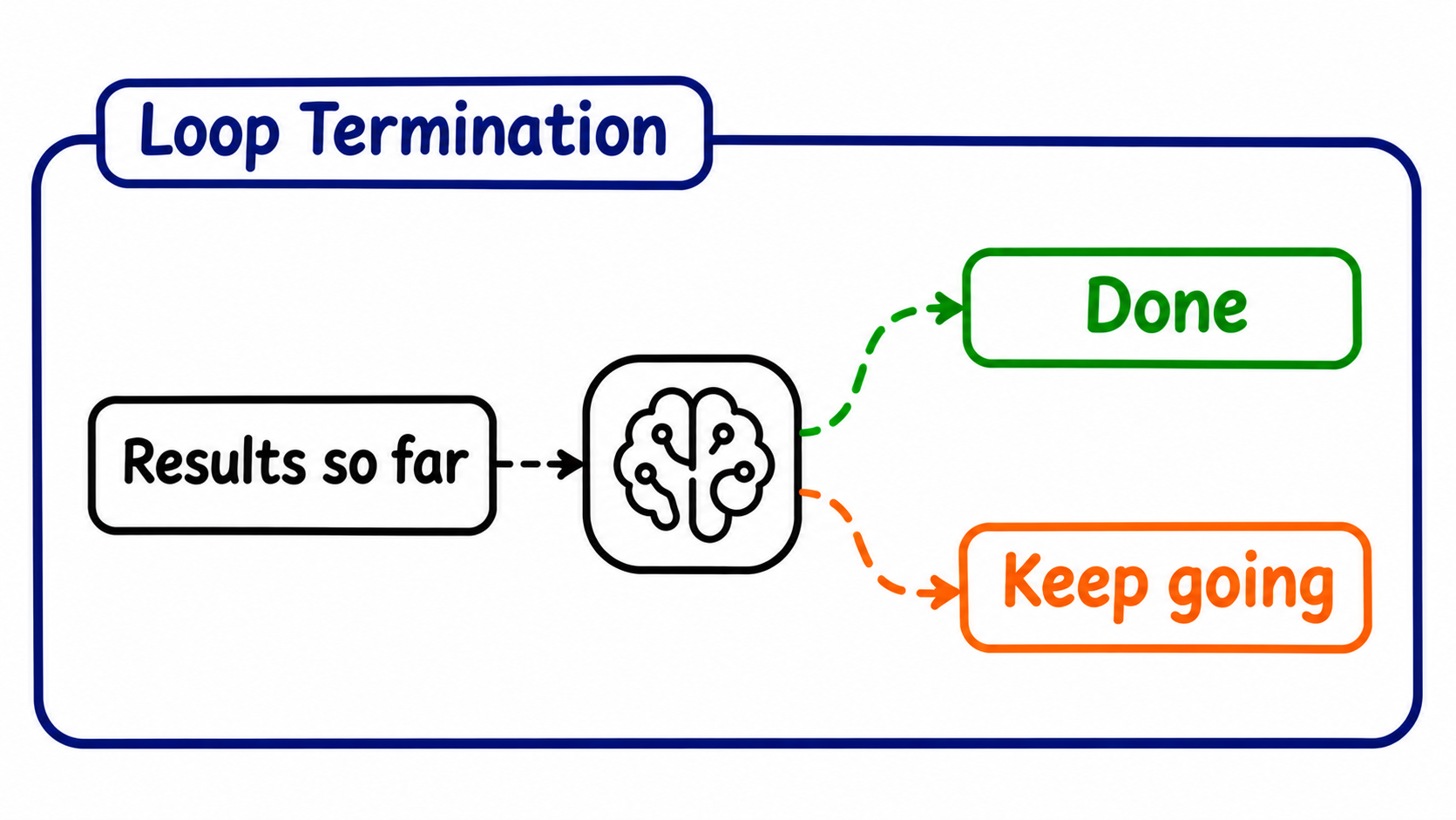
7. Loop Termination
Agents frequently stop too early or continue looping long after the job is finished. A decision model answers one question each round: does the result satisfy the acceptance criteria?
Thoughtworks describes this pattern as a "confidence gate" inside the harness around a coding agent, replacing an expensive LLM judge with a fast probability check.
Loop Termination
8. Context Compaction
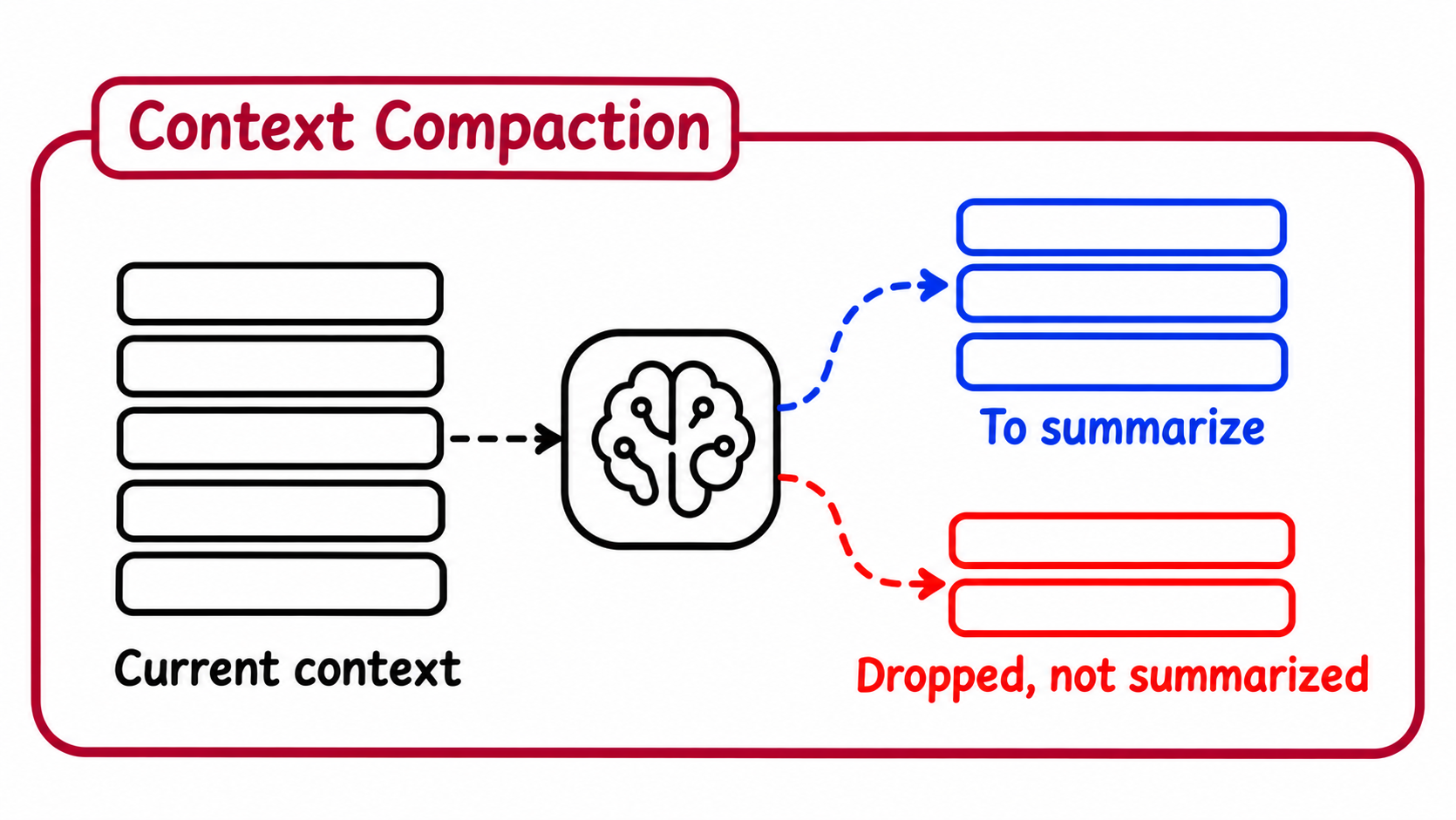
Long agent sessions fill the context window with outdated tool output and abandoned approaches. Most systems summarize everything, which consumes tokens and blurs important details.
Instead, score each piece of context for relevance to the current goal. Keep the valuable parts, summarize the middle band, and drop the stale material entirely.
Context Compaction
9. Evals at Full Coverage
LLM judges are accurate but expensive, so most teams evaluate only a small sample of traces. Decision models cost far less per verdict, which makes grading every trace realistic.
In TypeSafe's own benchmark, Jev cost $0.0004 per case compared with $0.0304 for GPT-5.6 Terra. It also finished in 0.4 seconds instead of 10.1 seconds, with nearly identical accuracy.

Evals at Full Coverage
Where Decision Models Fall Short
Decision models are not a universal replacement. On a 77-class routing test by AY Automate, Jev scored 78.8% while GPT-5.6 Terra scored 84.0%. In a phishing detection test, Jev initially trailed Claude Haiku 4.5 by a wide margin.
The solution was straightforward. When the tester divided the task into five narrow questions, Jev reached 95.0% accuracy, which shows that specific questions outperform broad ones.
Also keep vendor benchmarks in context, because TypeSafe's own test treats frontier model answers as ground truth. Run your own evaluations on your own data before switching.
Conclusion
Agentic RAG systems make dozens of small choices for every answer they produce, and most teams still pay a full LLM to make each one.
Decision models change that equation. They route prompts, block hazards, rank passages, verify citations, gate tools and grade traces in milliseconds. Your LLM can then focus on the one job it performs best, which is writing the answer.
Start with a single gate, ideally reranking or guardrails, and compare it against your current setup. Measure accuracy, latency and cost on real traffic, and expand to the next gate once the numbers prove themselves.
The smartest agents will not be the ones that think hardest at every step. They will be the ones that know which steps require thinking at all.
What is a decision model in agentic RAG, and how does it differ from a standard LLM?
A decision model is an AI model that selects from predefined options (such as yes/no, multiple-choice, or scoring scales) and returns a probability instead of generating free-form text. In agentic RAG, it acts as a fast, inexpensive referee at various gates, leaving the LLM to focus solely on writing the final answer.
Where can decision models be integrated within an agentic RAG pipeline?
They can be used across nine key stages, including model routing, guardrails, retrieval sufficiency checks, passage filtering and reranking, citation checking, tool-call gating, loop termination, context compaction, and full-coverage evaluations.
Are decision models meant to completely replace large language models?
No, they are not universal replacements. While they excel at high-speed binary or categorical choices (like routing or filtering), they can lag behind frontier LLMs on broad or complex classification tasks. They are best used alongside LLMs to handle specific gating steps efficiently.

Simplify Your Data Annotation Workflow With Proven Strategies