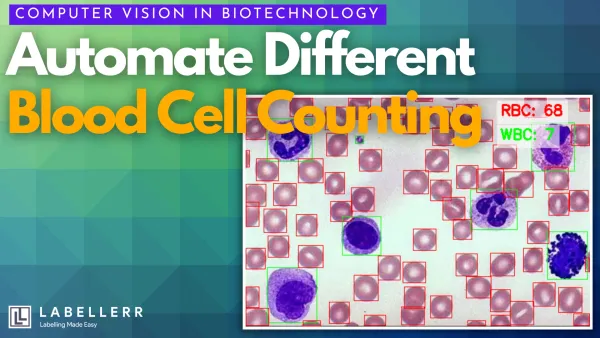
CV Use Case Count Different Types of Blood Cell using CV and Labellerr Computer vision automates RBC and WBC detection, replacing manual microscopy with fast, accurate, and consistent analysis. Using Labellerr’s annotation tools and COCO export, experts can create high-quality datasets and train reliable YOLO models for automated blood cell counting.
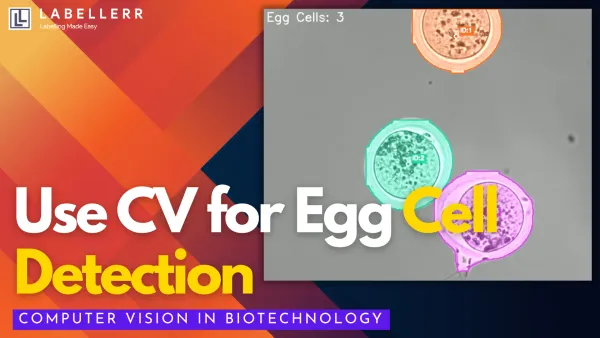
CV Use Case Building a Egg Cell Detection System using Labellerr and YOLO Computer vision automates egg cell detection, segmentation, and tracking in microscopic videos. With Labellerr’s AI-assisted annotation and automatic propagation, researchers can build accurate YOLO-based segmentation models quickly and scale their analysis efficiently.
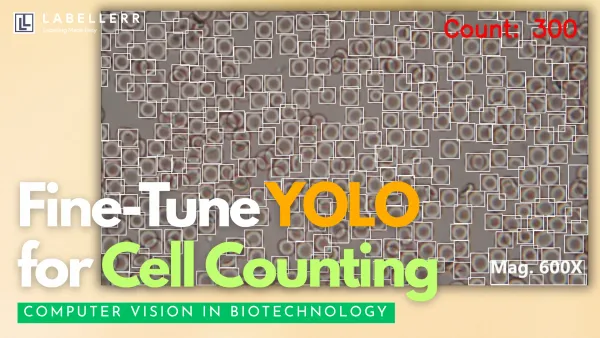
CV Use Case Building Cell Counting System using CV and Labellerr Computer vision automates cell detection and counting, replacing slow manual work with fast and accurate analysis. With Labellerr’s AI-assisted labeling and automated tracking, researchers can create high-quality datasets quickly and train reliable YOLO-based cell counting models.
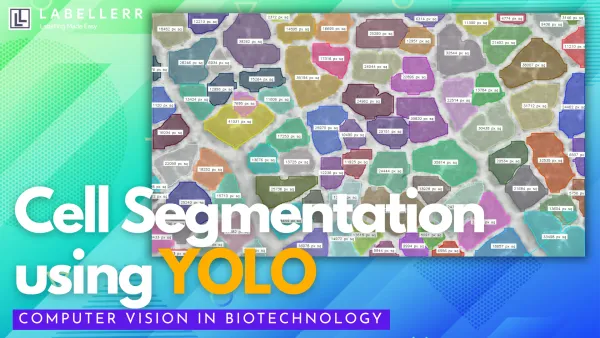
CV Use Case Building a Cell Segmentation System using Labellerr and YOLO Computer vision brings speed and accuracy to cell segmentation, processing dense microscopy images rapidly. With Labellerr’s SAM-powered annotation and collaboration tools, researchers can build scalable, reliable AI models for biomedical imaging.
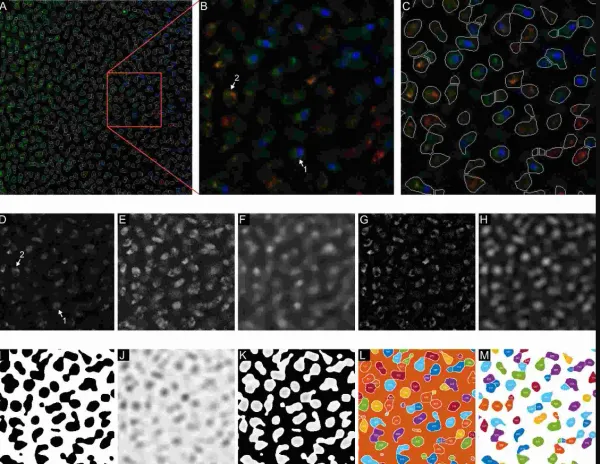
Cell Segmentation ML Guide on Cell Segmentation Using Watershed Algorithm Table of Contents 1. Introduction 2. Methodology 3. Conclusion 4. Frequently Asked Questions Introduction Cell segmentation plays a significant role in various fields within biotechnology and life sciences, enabling researchers to analyze cellular structures and functions with precision. One prominent technique employed for this purpose is the Watershed Algorithm, known
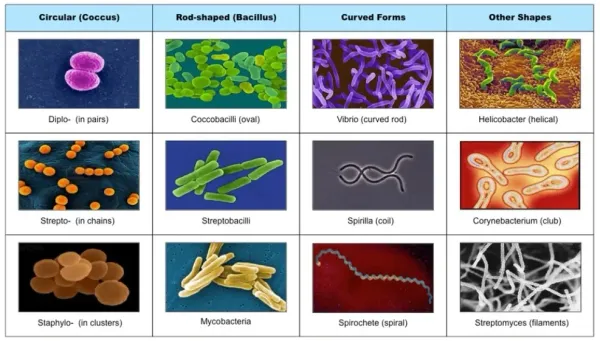
MIcroorganism Classification Micro-Organism Image Classification Using Deep Learning: ML Experts Guide Guide to micro-organism image classification using deep learning, detailing data prep, model building, training, and real-world applications in disease diagnosis, drug discovery, and ecology