AI model training 7 Top AI Model Training Service Providers in 2026 Training AI models is complex, but managed platforms simplify everything from annotation to deployment. Discover the top AI model training service providers in 2026 and find the right platform for your computer vision, LLM, or multimodal workflows.
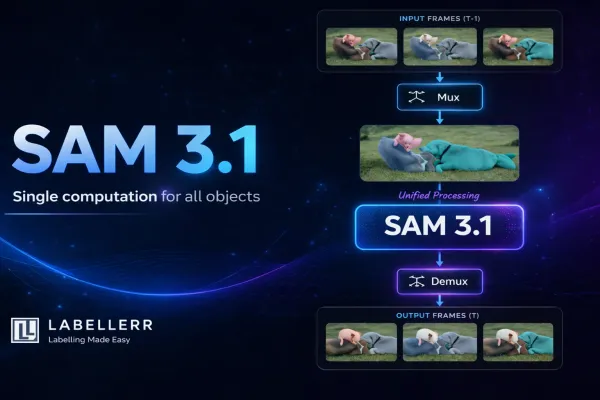
SAM 3.1 SAM 3.1 vs SAM 3 Faster Video Tracking SAM 3.1 introduces Object Multiplex to eliminate multi-object tracking bottlenecks. By processing multiple objects in a single pass, it delivers up to 7x faster inference and real-time performance without changing the model architecture.
egocentric datasets 7 Top Egocentric Data Service Providers for Robotics 2026 Egocentric data is transforming robotics by capturing the world from a robot’s perspective. This guide covers the top 7 providers in 2026 helping teams build accurate, real-world-ready models with high-quality first-person datasets.
robot manipulation 8 Best Video Labeling Tools for Robotics Manipulation 2026 Explore the best video annotation tools for robot manipulation in 2026. Learn how labeling data powers robotics, and compare top platforms for tracking, 3D data, and AI-assisted workflows.
synthetic data for robotics 7 Top Synthetic Data Platforms for Robotics in 2026 Synthetic data is transforming robotics by enabling scalable, safe, and fully labeled training environments. Discover top platforms powering simulation-driven robot learning in 2026.
human in the loop data labeling 6 Top Human-in-the-Loop Data Services for Robotics 2026 Human-in-the-loop data services help robotics teams train smarter AI by combining automation with human expertise. Discover the top HITL platforms used to label LiDAR, video, and sensor data for warehouse robots, autonomous systems, and humanoid robotics.
teleoperation robotics 7 Top Teleoperation Service Providers for Robotics in 2026 Teleoperation is powering the next generation of humanoid robots. Discover seven companies building the infrastructure for robot training, data pipelines, and human-guided control systems used by leading robotics programs in 2026.
AI cricket analytics AI-Powered Cricket Bowling Analyzer Using Yolo Build an AI-powered cricket bowling biomechanics system using YOLOv8x-Pose. Track shoulder, elbow, and wrist keypoints, calculate elbow angle, measure wrist speed, and visualize the bowling arm arc directly from standard broadcast video.
data annotation 7 Top Data Labeling Companies in Robotics 2026 Discover the top data annotation companies for robotics and physical AI in 2026. Compare platforms for egocentric video, LiDAR, and multimodal datasets that help robots learn faster with high-quality training data.
robot world model DreamDojo Platform for Scalable Robot Training DreamDojo is a generalist robot world model trained on 44,711 hours of human video. It learns interaction dynamics, enables zero-shot generalization, and supports model-based planning for scalable embodied AI.
Gemini 3.1 Pro Google Gemini 3.1 Pro Review and Analysis Gemini 3.1 Pro is Google’s most advanced reasoning model yet, built for deep agentic workflows, large-scale code generation, and multimodal tasks. With 65K output tokens and major benchmark gains, it shifts AI from conversation to autonomous execution.
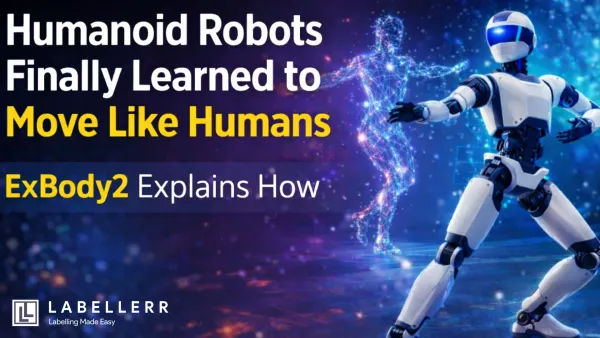
humanoid robotics ExBody2 Turns Simulated Motion Into Real Human Expression Humanoid robots fail when expressive motion breaks balance. ExBody2 shows how feasibility-aware data curation and decoupled control enable stable, long-horizon, human-like full-body motion on real robots.
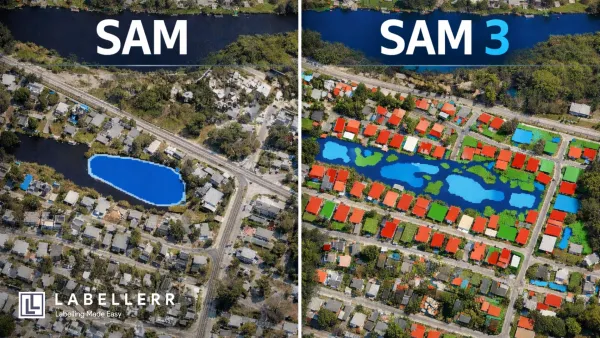
SAM 3 Benchmarking SAM and SAM 3 on Aerial Data Compare SAM and SAM 3 for aerial image segmentation. See zero-shot benchmark results across satellite datasets, performance differences, and how to use both models inside Labellerr for faster geospatial annotation workflows.
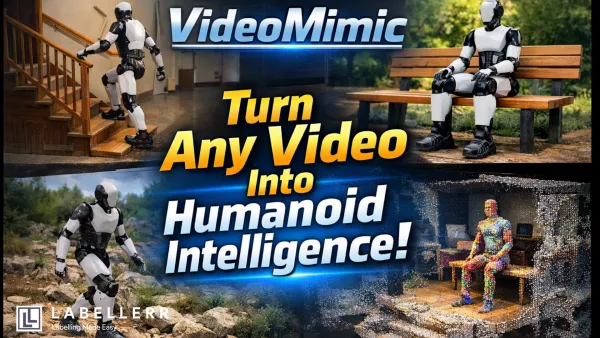
humanoid robot learning VideoMimic: How Robots Learn Human Motion VideoMimic turns monocular human videos into deployable humanoid robot policies. By combining 4D reconstruction, scene geometry, and reinforcement learning, it enables context-aware robot control without motion capture or handcrafted rewards.
Spatial Reasoning How Think3D Gives Vision Models a Real Sense of Space Think3D enables AI models to reason directly in 3D space instead of flat images. By combining 3D reconstruction, camera geometry, and reinforcement learning, it transforms how vision-language models understand depth, occlusion, and viewpoint change.
egocentric video generation EgoControl: Controllable First Person Video Simulation EgoControl reframes egocentric video generation as embodied simulation. By conditioning diffusion models on future 3D full-body poses, it enables controllable, physically grounded first-person video prediction aligned with intended human motion.
SemanticGen Why SemanticGen Is a Leap for Long-Form Video AI SemanticGen redefines video generation by separating semantic planning from pixel synthesis. Using a two-stage diffusion process, it enables long-form, coherent videos while avoiding the computational limits of traditional diffusion models.
Genie 3 Genie 3 Doesn't Make Videos, It Builds Worlds Genie 3 by Google DeepMind is a real-time 3D world model that creates interactive, persistent environments. It enables scalable egocentric data for robotics training, helping embodied AI learn navigation, perception, and long-horizon reasoning.
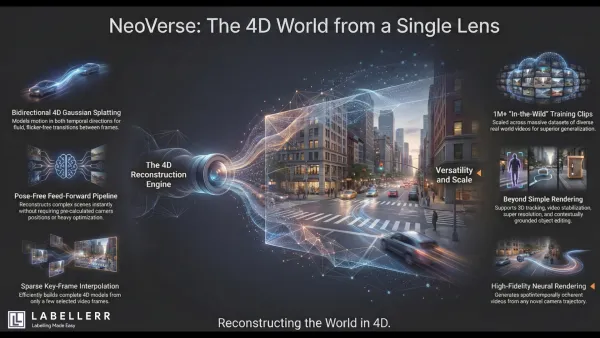
NeoVerse NeoVerse 4D World Model: Escaping the 4D Data Bottleneck NeoVerse is a scalable 4D world model that reconstructs dynamic scenes directly from in-the-wild monocular videos. Using a pose-free, feed-forward design, it eliminates multi-view capture and heavy preprocessing while enabling fast, high-quality 4D reconstruction and video generation.
egocentric datasets How EgoX Converts Third-Person to First-Person Video EgoX transforms a single third-person video into a realistic first-person experience by grounding video diffusion models in 3D geometry, enabling accurate egocentric perception without extra sensors or ground-truth data.
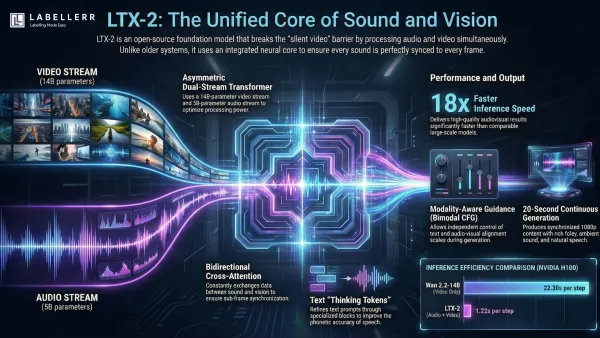
LTX-2 Generate Video and Audio Together with LTX-2 LTX-2 is the first open-source model that generates synchronized audio and video together using a joint diffusion process, enabling realistic speech, sound effects, and motion alignment in a single system.
computer vision Small Object Detection using YOLO with SAHI Explained Small object detection often fails with standard YOLO inference due to image resizing. This blog shows how Slicing Aided Hyper Inference (SAHI) improves recall by breaking images into slices and recovering missed objects.
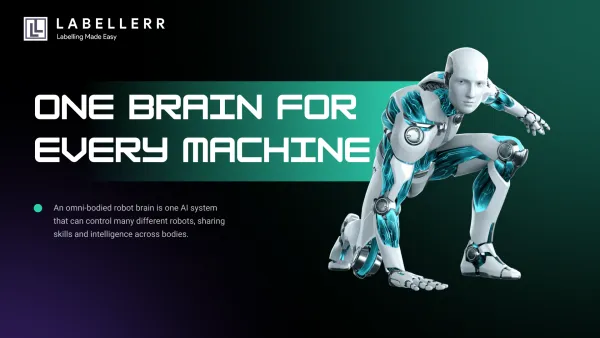
robot brain architecture Omni-Bodied Robot Brain: How One Brain Controls Many Robots Omni-bodied robot brains separate intelligence from hardware, enabling robots to share skills, adapt across bodies, and scale faster using foundation models, simulation, and shared data.
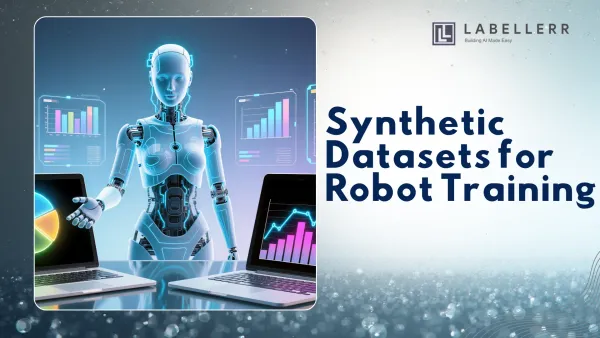
Synthetic Training Data The Truth About Synthetic Robot Data Synthetic training data enables robots to learn perception, motion, and interaction at scale. Generated in simulation, it offers low-cost labeling, safe edge-case testing, and faster development while addressing real-world data scarcity.
Teleoperation Datasets Teleoperation Datasets: The Fuel for Robot Learning Teleoperation datasets capture real robot behavior through human control. They provide high-quality demonstrations that help robots learn manipulation, navigation, and coordination in real-world environments.